

Walk into any Buddhist temple, scroll through images of sacred statues, or examine ancient Eastern art, and you’ll notice something remarkable: nearly every deity, Buddha, or bodhisattva sits on the same foundation — a lotus flower.
But why?
The lotus throne isn’t just decorative artistry. It’s a visual sermon, a philosophical statement carved into bronze and stone, teaching one of life’s most profound lessons without uttering a single word.
The Paradox That Started It All
Picture a muddy pond. Murky water, decaying leaves, suffocating darkness below the surface. Not exactly the birthplace you’d expect for one of nature’s most exquisite flowers.
Yet that’s precisely where the lotus begins its journey.
Its roots anchor deep in the mud — the very symbol of impurity, ignorance, and suffering in Buddhist philosophy. But here’s where the magic happens: the lotus doesn’t remain buried. It pushes upward through cloudy water, breaks the surface, and unfolds into a pristine bloom untouched by the filth it emerged from.
The mud doesn’t stain it. The murky water doesn’t corrupt it. The lotus rises, beautiful and unblemished.
Sound familiar? It should. Because that’s the human story.
Why Ancient Sculptors Couldn’t Ignore This Metaphor
When artisans began creating sacred statues centuries ago, they faced a challenge: how do you visually represent enlightenment? How do you show the journey from suffering to liberation in a single image?
The lotus throne became their answer.
Placing a Buddha or deity on a lotus pedestal wasn’t random decoration. It was deliberate symbolism declaring: “This being has risen above the mud of earthly existence. They’ve emerged pure from the murky waters of desire, hatred, and delusion.”
Every fold of those metal or stone petals tells the same story — transformation is possible. Purity can emerge from impurity. Enlightenment can bloom from ignorance.
The Three-Stage Journey: Mud, Water, Air
The lotus throne represents a complete spiritual progression, and master sculptors understood this deeply:
The Mud (Our Starting Point)
This is where we all begin. The mud represents our everyday struggles — greed, anger, confusion, pain, attachment. It’s the messy, uncomfortable reality of being human. In Buddhist statuary, the closed bud often sits at the base, still touching the mud, symbolizing beings just beginning their spiritual journey.
The Water (The Path)
Rising through water represents the gradual process of purification. It’s meditation, practice, ethical living, and inner work. The stem pushes upward but hasn’t yet reached freedom. Look closely at detailed lotus thrones, and you’ll sometimes see the stem carved beneath the bloom — a reminder that the journey takes effort and persistence.
The Air (Enlightenment)
The open flower floating above the water represents liberation. The lotus has transcended its origins completely. It sits in fresh air and sunlight, sustained by roots in the mud but no longer defined by them. When you see a Buddha seated on a fully bloomed lotus throne, you’re seeing the endpoint of spiritual evolution.
What Those Petals Actually Mean
Notice how lotus thrones feature different numbers of petals? That’s not artistic whimsy.
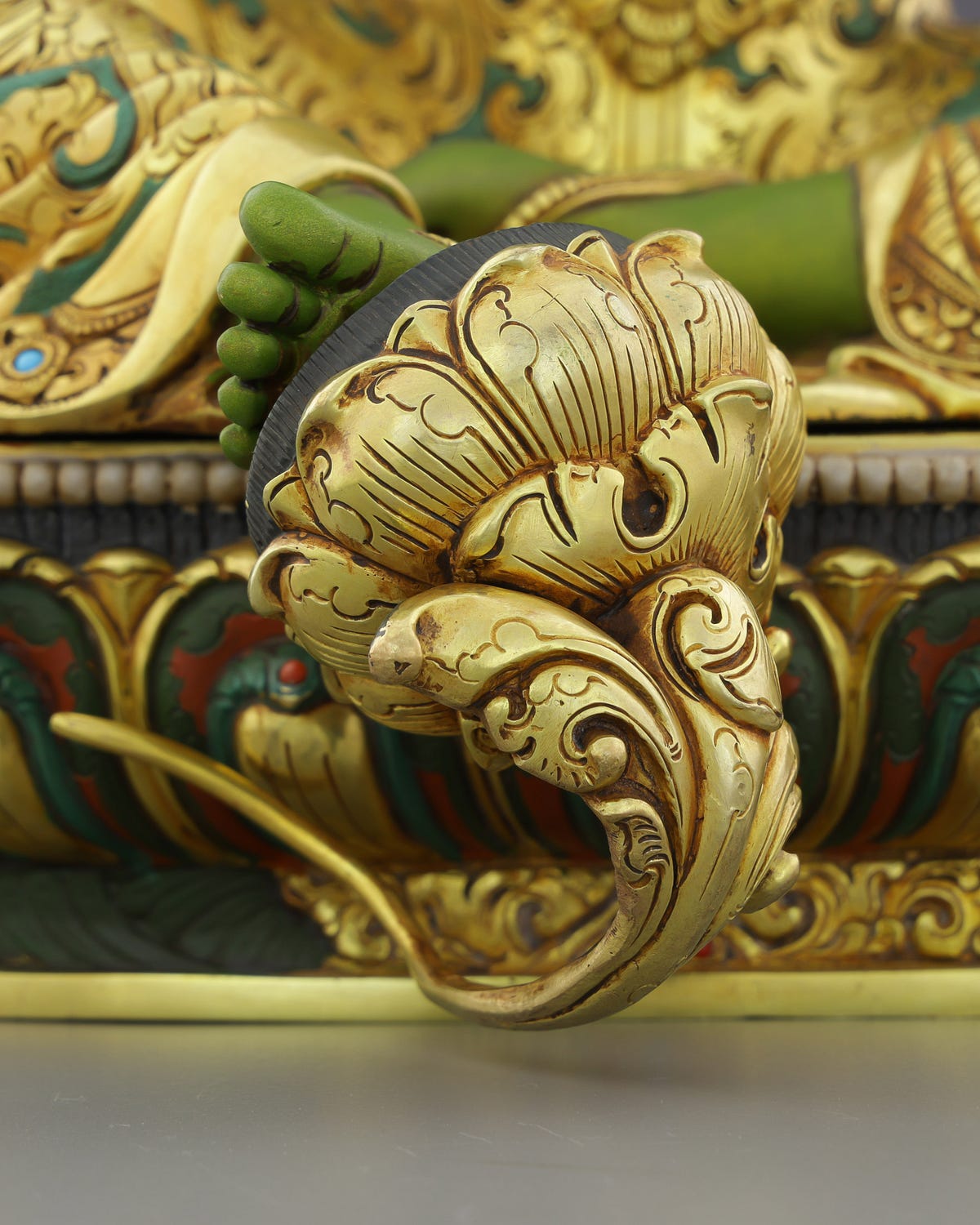
Eight petals represent the Noble Eightfold Path — Buddhism’s roadmap to enlightenment encompassing right view, right intention, right speech, right action, right livelihood, right effort, right mindfulness, and right concentration.
Lotus thrones with multiple layers of petals symbolize different levels of consciousness or spiritual attainment. The more elaborate the throne, the higher the being’s realization.
Some thrones show partially opened petals alongside fully bloomed ones — a beautiful reminder that awakening happens gradually, petal by petal, not all at once.
The Universal Message That Transcends Religion
Here’s what makes the lotus throne so powerful: you don’t need to be Buddhist to understand its message.
Every culture recognizes the struggle of rising above difficult circumstances. We all know what it feels like to be stuck in the “mud” of life — whether that’s poverty, addiction, trauma, toxic relationships, or simple stagnation.
The lotus throne whispers a radical promise: your difficult beginning doesn’t determine your ending. The mud that surrounds you can actually become the nourishment for your most beautiful transformation.
Think about it. The lotus doesn’t grow despite the mud — it grows because of the mud. Without that nutrient-rich muck, there would be no flower.
Your struggles aren’t obstacles to your growth. They’re the fertilizer.
What Modern Statue Collectors Should Know
When you’re examining Buddhist statues — whether you’re a collector, spiritual practitioner, or art enthusiast — the lotus throne deserves special attention.
Quality indicators:
The finest statues feature lotus thrones with individually carved petals showing realistic detail. Each petal should have natural curvature and depth. Mass-produced pieces often have simplified, flat representations that miss the symbol’s deeper meaning.
Positioning matters:
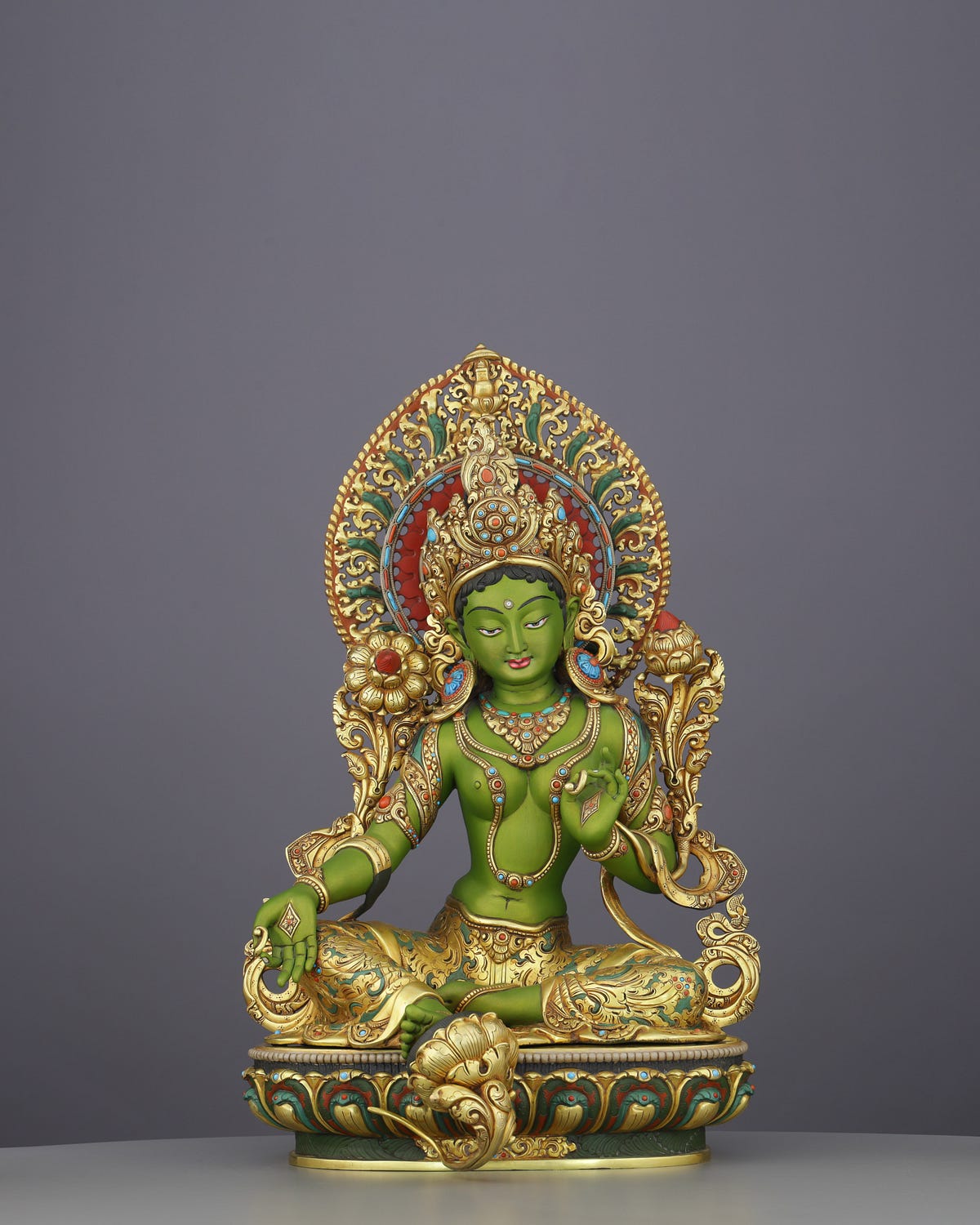
Notice how the deity sits on the throne. Fully enlightened Buddhas typically rest on a fully bloomed lotus. Bodhisattvas, who’ve chosen to remain in the cycle of rebirth to help others, sometimes sit on partially opened flowers — they’ve achieved purity but remain accessible to those still in the mud.
Color symbolism:
While metal statues may not show color, traditional paintings depict lotus thrones in specific hues. White lotuses represent spiritual perfection and mental purity. Red symbolizes the heart, compassion, and love. Blue represents wisdom and knowledge. Pink is the supreme lotus, often reserved for the highest deities.
The Lotus Throne in Your Daily Life
The beautiful thing about this ancient symbol? You don’t need a statue to apply its wisdom.
Every time you face difficulty, you’re in the mud. Every effort you make to grow despite challenges is you pushing through the water. Every moment of clarity, peace, or genuine kindness you experience is the lotus blooming.
The lotus throne reminds us that transformation isn’t about escaping our circumstances — it’s about transcending them while remaining rooted in reality.
It teaches that purity doesn’t mean never encountering impurity. It means not being stained by it.
It shows that the most profound beauty often emerges from the darkest places.
Why This Symbol Endures After Millennia
Walk through modern Buddhist temples or browse contemporary spiritual art, and you’ll still see the lotus throne everywhere. Despite thousands of years of artistic evolution, sculptors and artists haven’t found a better symbol.
Why? Because the message remains eternally relevant.
In an age of social media highlight reels and constant comparison, the lotus throne offers countercultural wisdom: your messy beginning is not just acceptable — it’s essential. The mud stage isn’t something to hide or feel ashamed of. It’s the foundation of every beautiful thing that comes after.
When you understand what that carved stone pedestal truly represents, every Buddhist statue becomes an invitation — not to worship, but to remember your own capacity for transformation.
The Final Truth Carved in Stone
The next time you see a Buddha statue seated on a lotus throne, look past the aesthetics. That’s not just decorative base work. That’s a master sculptor telling you something crucial about your own life.
You might be in the mud right now. The water above you might seem impossibly murky. But within you exists the same potential as that lotus seed — the ability to transform darkness into light, suffering into wisdom, confusion into clarity.
The lotus doesn’t bloom despite the mud.
It blooms through the mud.
And so can you.


