

Somewhere in a quiet monastery above the Kathmandu Valley, a monk rises before dawn and begins his recitations. In a temple in Bangkok, a novice carefully sweeps the courtyard while meditating on impermanence. And in a cave in Bhutan, a tantric practitioner visualizes the luminous form of a deity, working toward liberation in a single lifetime.
Three practitioners. Three traditions. One Buddha.
Buddhism, born over 2,500 years ago in the forests of northern India, has traveled far — across mountain passes and ocean routes, through centuries of royal patronage and political upheaval — and in its journey, it has evolved into three major schools, each with its own philosophy, practice, and vision of what it means to be free.
Whether you are a curious seeker, a collector of sacred Himalayan art, or someone simply trying to understand why Buddhist statues can look so strikingly different from one another, this guide is for you.
Let’s walk the path — all three of them.
A River with Three Great Currents
Before the split, there was one tradition: the original teachings of Siddhartha Gautama, the historical Buddha who attained enlightenment beneath the Bodhi tree in Bodh Gaya around the 5th century BCE.
After his passing, his disciples preserved his words in oral lineages and later in written texts. Over centuries, interpretive differences — about the nature of the mind, the role of compassion, the accessibility of liberation — gave rise to distinct schools.
Think of it not as a fracture, but as a river splitting into three powerful currents: each drawn from the same source, each carrying the same essential water, but flowing through very different landscapes.
Those three currents are Theravāda, Mahāyāna, and Vajrayāna.
Theravāda: The Way of the Elders
The Oldest Surviving School
Theravāda means “Teaching of the Elders” in Pāli, the ancient language in which its scriptures are preserved. It is the oldest surviving school of Buddhism and remains the dominant tradition in Sri Lanka, Thailand, Myanmar, Cambodia, and Laos.
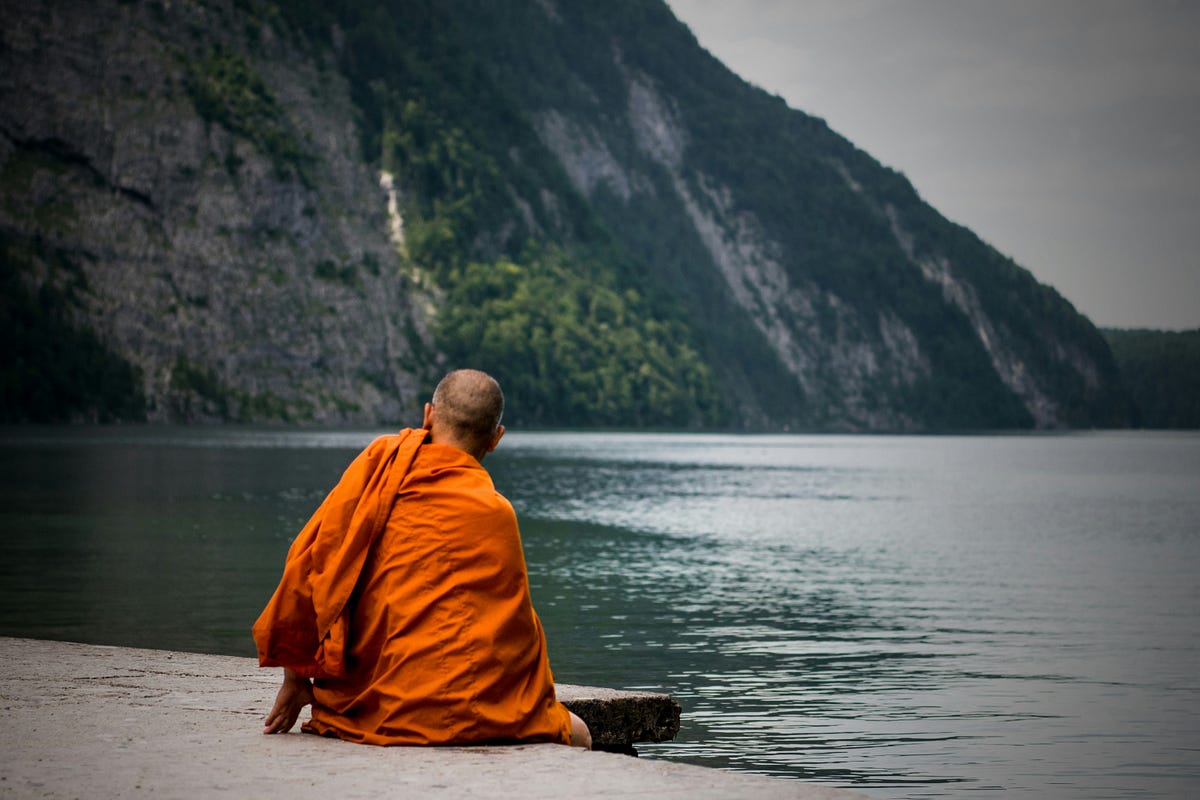
Theravāda holds tightly to the original teachings of the Buddha as recorded in the Pāli Canon — a vast collection of suttas (discourses), monastic rules (Vinaya), and philosophical analysis (Abhidhamma). For Theravādins, authenticity matters. The closer a practice is to what the historical Buddha taught and lived, the more trustworthy it is.
The Ideal: The Arahant
At the heart of Theravāda is the figure of the Arahant — a fully enlightened being who has eradicated all defilements, broken the cycle of rebirth, and upon death will enter parinibbāna, a state beyond all suffering and becoming.
This is the goal: individual liberation, achieved through disciplined effort.
The path is laid out with elegant clarity in the Noble Eightfold Path: right view, right intention, right speech, right action, right livelihood, right effort, right mindfulness, and right concentration. It is a path of gradual purification — of morality (sīla), meditation (samādhi), and wisdom (paññā).
Practice and Community
Theravāda is deeply monastic. The Sangha — the community of ordained monks and nuns — holds enormous spiritual authority. Laypeople earn merit by supporting the monastic community, observing the Five Precepts, and practicing generosity and meditation. The tradition places great emphasis on vipassanā (insight meditation) as the direct means to see through the illusion of a permanent self.
There are no elaborate deity visualizations, no tantric initiations, no cosmic Bodhisattvas to appeal to. It is, in many ways, a beautifully spare tradition — like a clean room in which nothing distracts from the work at hand.
Theravāda Art
Sacred objects in the Theravāda tradition tend to reflect this austerity. Images of the historical Buddha dominate — Shakyamuni in meditation, in the bhumisparsha (earth-touching) mudra at the moment of enlightenment, or reclining in his final passing into parinibbāna. Theravāda statues are often gilded and serene, with an emphasis on human dignity rather than celestial splendor.
Mahāyāna: The Great Vehicle
Buddhism Opens Its Arms
Around the 1st century BCE and continuing into the early centuries of the common era, a new wave of texts began to circulate in India. These sutras — texts claiming to be the direct word of the Buddha — presented a dramatically expanded vision of the Buddhist path.
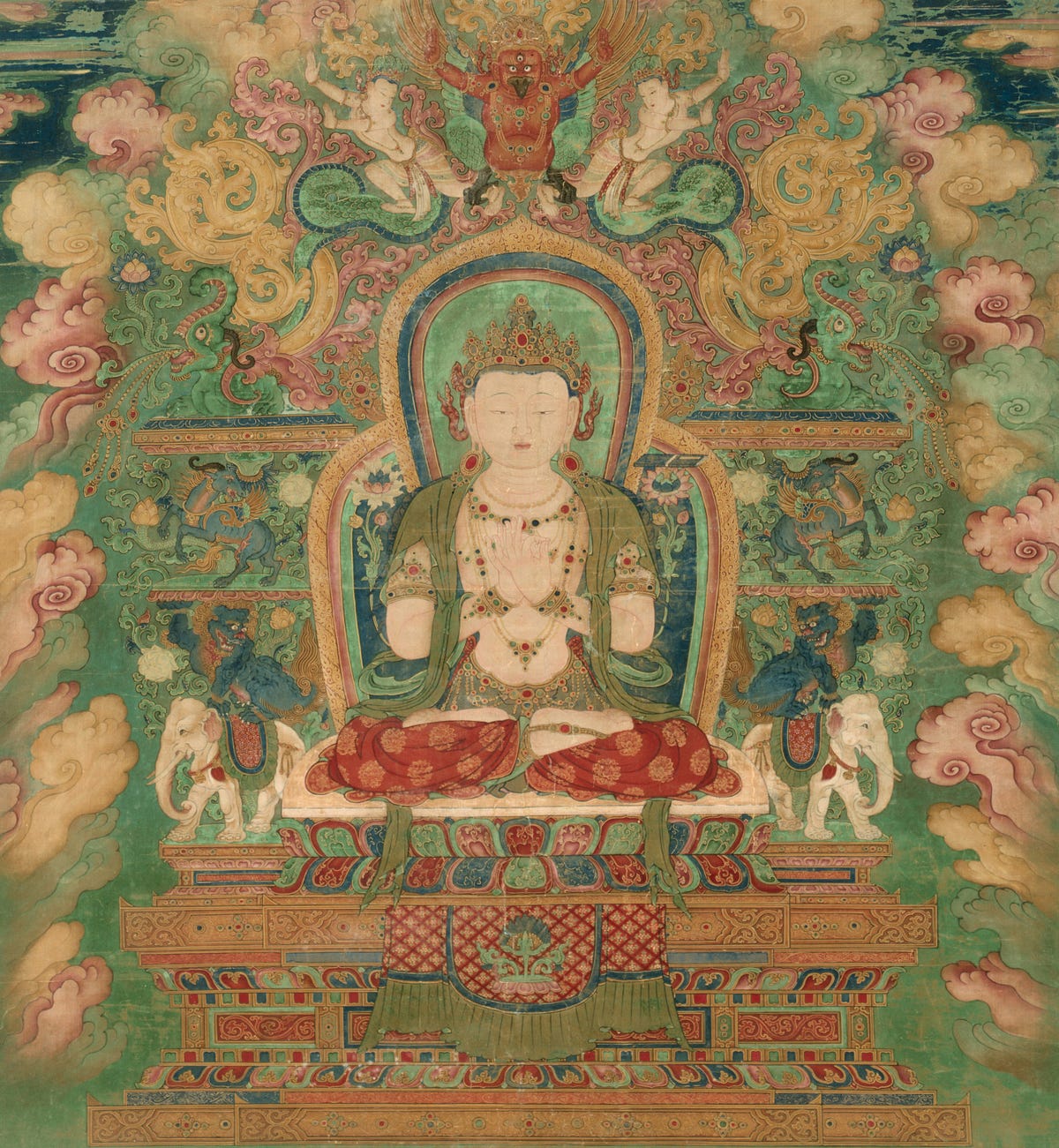
This movement came to be known as Mahāyāna, meaning “Great Vehicle.” Mahāyāna was deliberately more expansive in its scope and vision. It is the dominant tradition in China, Japan, Korea, Vietnam, and Tibet (where it merges with Vajrayāna). It is extraordinary in its philosophical richness and its emotional warmth.
The Ideal: The Bodhisattva
Where Theravāda holds up the Arahant, Mahāyāna elevates the Bodhisattva — a being who, out of limitless compassion (karuṇā), vows to attain full Buddhahood not for their own liberation alone but for the liberation of all sentient beings.
This is the Bodhicitta — the awakening mind — , and it is the cornerstone of Mahāyāna practice. A practitioner who generates Bodhicitta takes the Bodhisattva Vow: to remain in the cycle of rebirth, returning again and again until every living being has been freed from suffering.
It is an almost staggeringly generous aspiration. And it reshapes everything: how you meditate, how you relate to others, how you understand suffering itself.
The Six Perfections
Mahāyāna maps the Bodhisattva’s path through the Six Perfections (Pāramitās): generosity, ethical discipline, patience, diligent effort, meditation, and wisdom — cultivated across countless lifetimes as the Bodhisattva accumulates the merit and wisdom necessary for full Buddhahood.
Two philosophical traditions dominate Mahāyāna thought: the Madhyamaka (Middle Way), championed by the philosopher Nāgārjuna in the 2nd century CE, which teaches that all phenomena are empty (śūnyatā) of inherent existence; and the Yogācāra (Mind-Only), developed by Asanga and Vasubandhu, which explores how consciousness constructs our experience of reality.
A Universe of Buddhas and Bodhisattvas
One of the most striking features of Mahāyāna is its rich cosmological imagination. Where Theravāda focuses almost entirely on Shakyamuni, Mahāyāna opens into a vast celestial landscape populated by countless Buddhas and Bodhisattvas — each residing in their own Pure Land, each offering different qualities of compassion and wisdom to suffering beings.
Bodhisattvas such as Avalokiteśvara (Chengresi), the embodiment of compassion; Mañjuśrī, the embodiment of wisdom; and Vajrapāṇi, the embodiment of power, become central figures — not gods in the Western sense, but enlightened beings who respond to sincere prayer and practice.
This celestial richness is mirrored in Mahāyāna sacred art. Bodhisattvas wear jeweled crowns and silken robes; their expressions balance serenity with deep compassion.
Vajrayāna: The Diamond Vehicle
The Third Revolution
Emerging in India perhaps between the 5th and 7th centuries CE, Vajrayāna — the “Diamond Vehicle” or “Thunderbolt Vehicle” — represents the third great flowering of Buddhism. It is sometimes described as an extension of Mahāyāna but stands apart in its methods, its complexity, and its breathtaking ambition.
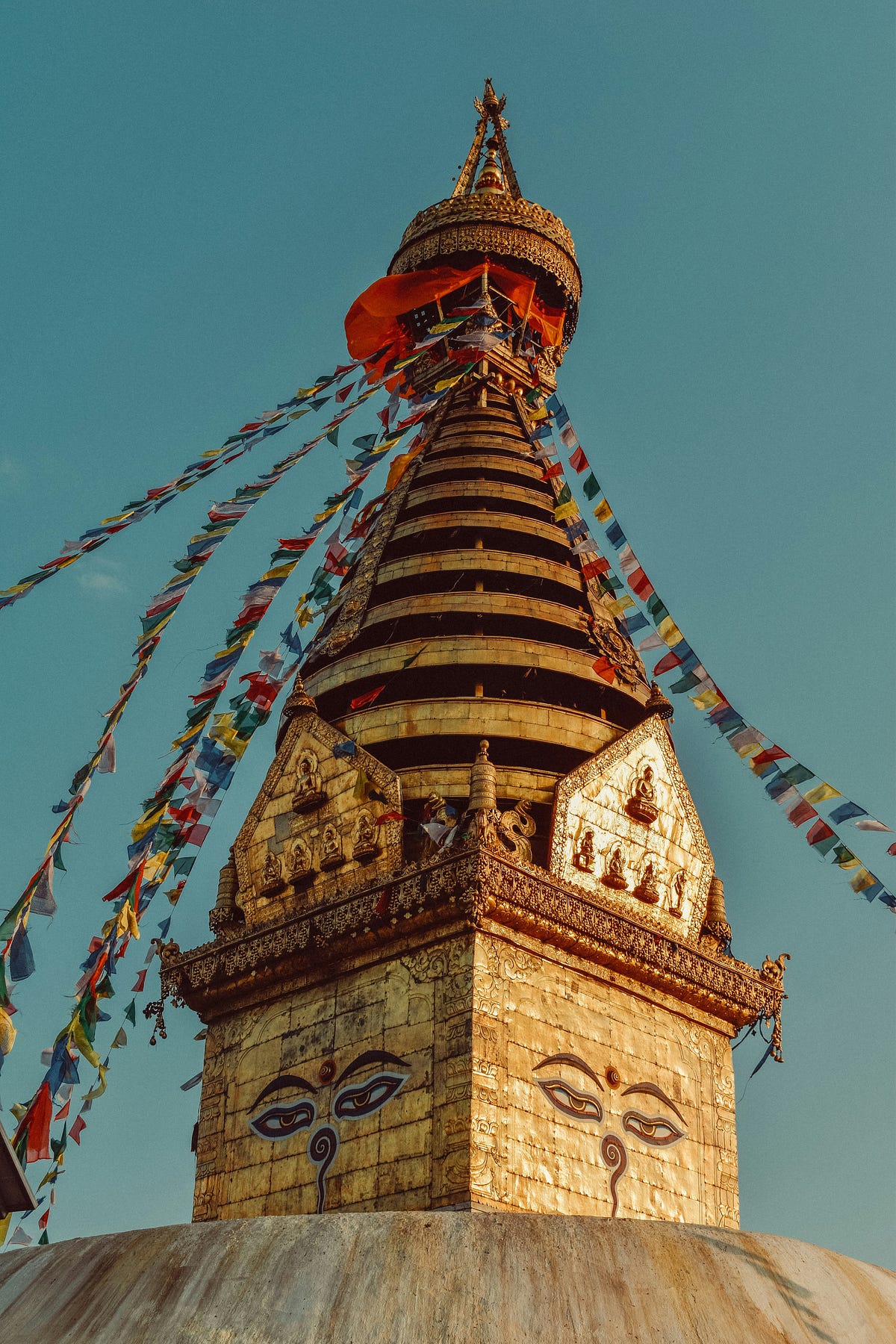
Today, Vajrayāna is practiced primarily in Tibet, Bhutan, Nepal, Mongolia, and parts of Japan (as Shingon Buddhism). It is the tradition most associated with the Himalayan world — with the sacred arts of Patan, the monastery complexes of Ladakh, and the painted scroll thangkas that map the cosmos in intricate detail.
It is also the tradition from which the magnificent statues on vajraicon.com emerge.
The Same Goal, Accelerated
Vajrayāna accepts the Mahāyāna vision entirely — the Bodhisattva ideal, the philosophy of emptiness, the aspiration to liberate all beings. But it claims to offer something unprecedented: a path to Buddhahood not in countless lifetimes, but potentially within a single life.
This is the famous claim of Vajrayāna as the “fastest path to enlightenment,” and it deserves careful examination.
Why Faster? The Logic of Tantra
The key insight of Vajrayāna is this: the Buddha nature is not something to be gradually built up from scratch. It is already present, fully complete, within every sentient being — like the sun that is always shining, temporarily obscured by clouds of delusion and karma.
Rather than slowly clearing those clouds through purification alone, Vajrayāna works with the clouds themselves. It transforms poison into medicine: desire becomes a vehicle for recognizing the bliss of awareness; anger reveals the mirror-like clarity of wisdom; ignorance opens into the luminosity of the ground.
This transformation is enacted through powerful methods unavailable in earlier schools:
Deity Yoga (Deva-yoga): The practitioner doesn’t merely pray to a deity like Vajrasattva or Green Tara — they become the deity in meditation. Through detailed visualization of the deity’s form, palace, and qualities, and through the recitation of the deity’s mantra, the practitioner trains the mind to inhabit the nature of enlightenment directly. The deity is understood not as an external being but as a mirror of the practitioner’s own awakened nature.
Mantra: Sacred syllables carry the blessings of the Buddha’s awakened speech. Recitation of mantras — from the simple Om Mani Padme Hum to complex sequences that can fill entire texts — purifies karma, accumulates merit, and stabilizes the mind in the deity’s presence.
Mandala: The sacred geometric diagram of the universe, with the deity at its center, becomes both a meditation support and an offering. The mandala represents the entire world, transformed into pure perception.
Initiation (Wang): Unlike Theravāda or general Mahāyāna practice, Vajrayāna teachings are transmitted through formal empowerment (abhiṣeka) from a qualified teacher (lama). Without initiation, the highest tantric practices are not merely ineffective — they can be harmful. The teacher-student relationship is paramount.
The Three Vehicles Within One
Vajrayāna does not replace the lower vehicles — it requires them. A practitioner must first take refuge in the Three Jewels (Buddha, Dharma, Sangha). They must observe ethical precepts as the foundation , as in Theravāda. They must generate Bodhicitta and cultivate compassion for all beings — as in Mahāyāna. Only on this foundation does Vajrayāna practice become stable and fruitful.
Is It Truly the Fastest Path?
Traditional texts — including the Guhyasamāja Tantra, the Hevajra Tantra, and countless commentaries by masters like Tsongkhapa — consistently assert that Vajrayāna can lead to full Buddhahood in a single lifetime, compared to the three-eon trajectory of the standard Mahāyāna path.
But Vajrayāna teachers themselves are careful about how this is understood. The speed is not automatic. It depends on:
— A genuine, stable foundation in renunciation, compassion, and the view of emptiness
— Receiving authentic initiation from a qualified lineage-holder
— Keeping sacred commitments (samaya) with extreme care
— Sustained, dedicated practice, often including lengthy retreat
Master Dilgo Khyentse Rinpoche observed that the Vajrayāna is like a jet aircraft: it can indeed travel far faster than walking — but it also requires more fuel, more precision, and more skill to pilot.
The path is fast, not because it is easy, but because it works at the most fundamental level of the mind — with the subtlest energies, the deepest patterns, the root of consciousness itself.
Why Sacred Statues Matter Differently in Each School
A Theravāda Buddha statue typically depicts Shakyamuni in meditation or at the moment of enlightenment. Its beauty lies in stillness and historical grounding — this is the man who sat under the tree and woke up.
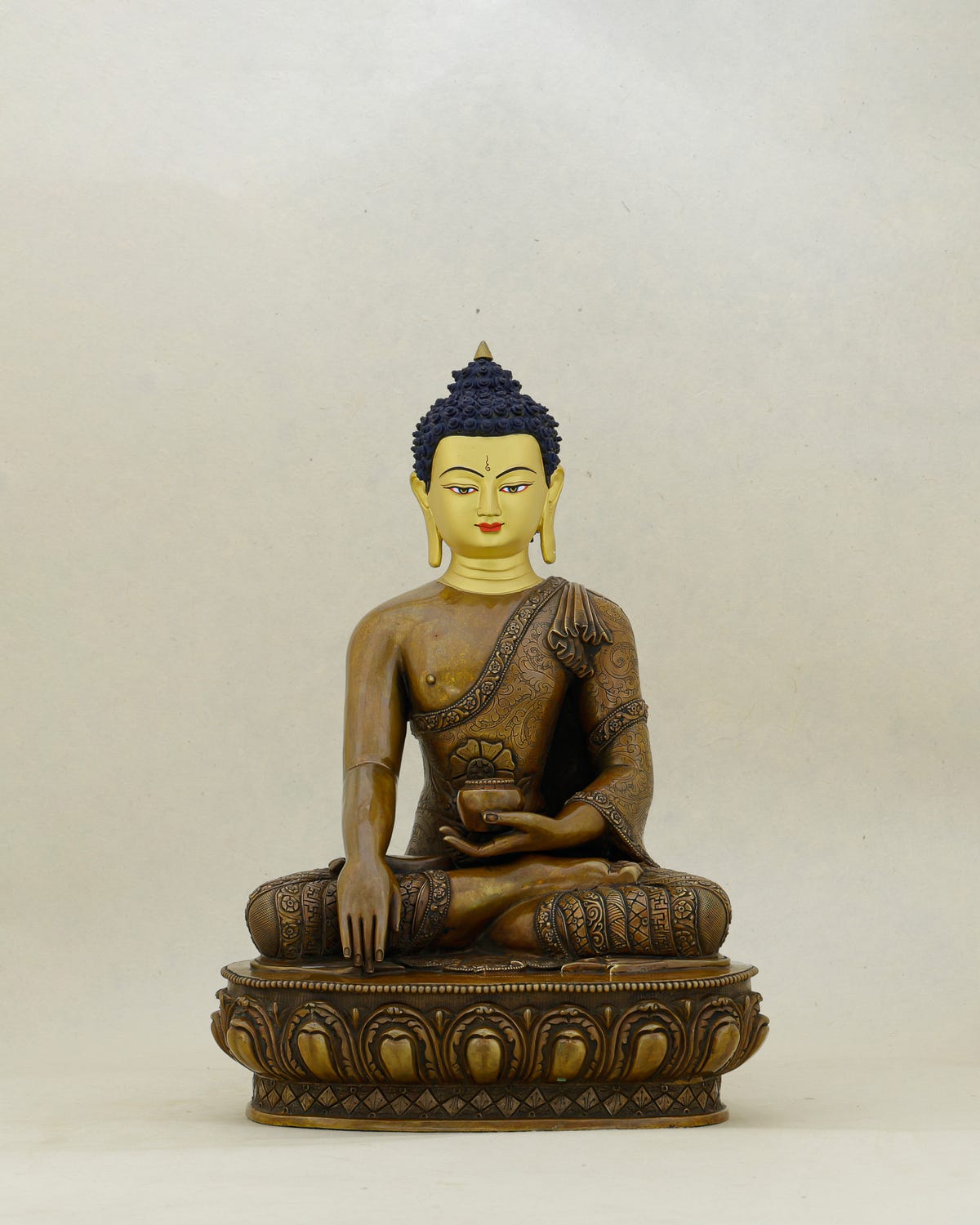
A Mahāyāna Bodhisattva statue — a Chengresi with a thousand compassionate arms, a Mañjuśrī raising his wisdom sword — embodies the cosmic aspiration to liberate all beings. The lavish ornamentation is not decoration for its own sake; it expresses the radiance of the enlightened qualities the figure represents.
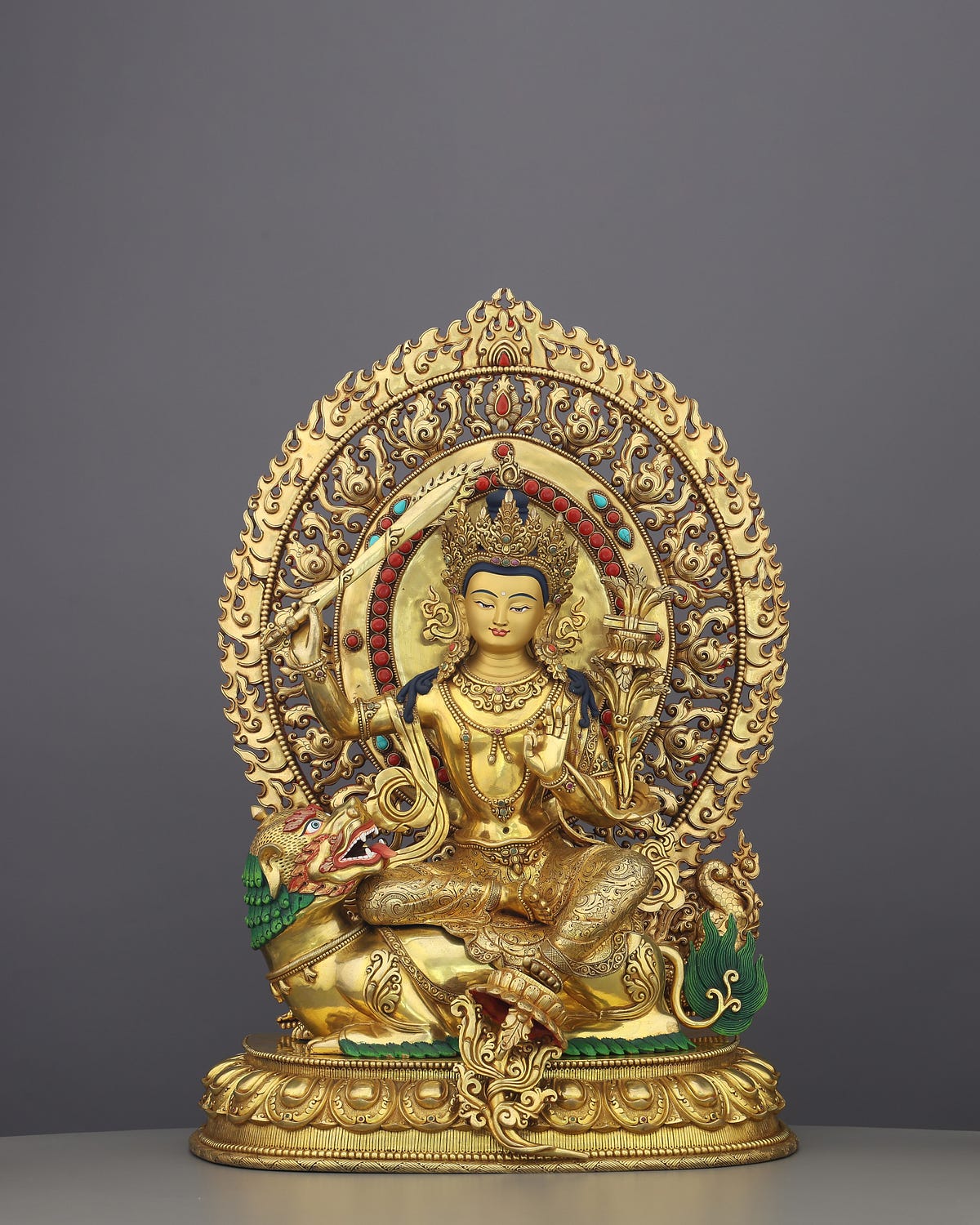
A Vajrayāna deity statue — a Vajrasattva holding the vajra and ghanta, a Green Tara in lalitāsana (royal ease), a fierce Vajrapāṇi brandishing his thunderbolt — is a meditation object in the fullest sense. Properly consecrated through the rabné ceremony, it becomes a living presence — a door through which the blessing of the deity enters the world.
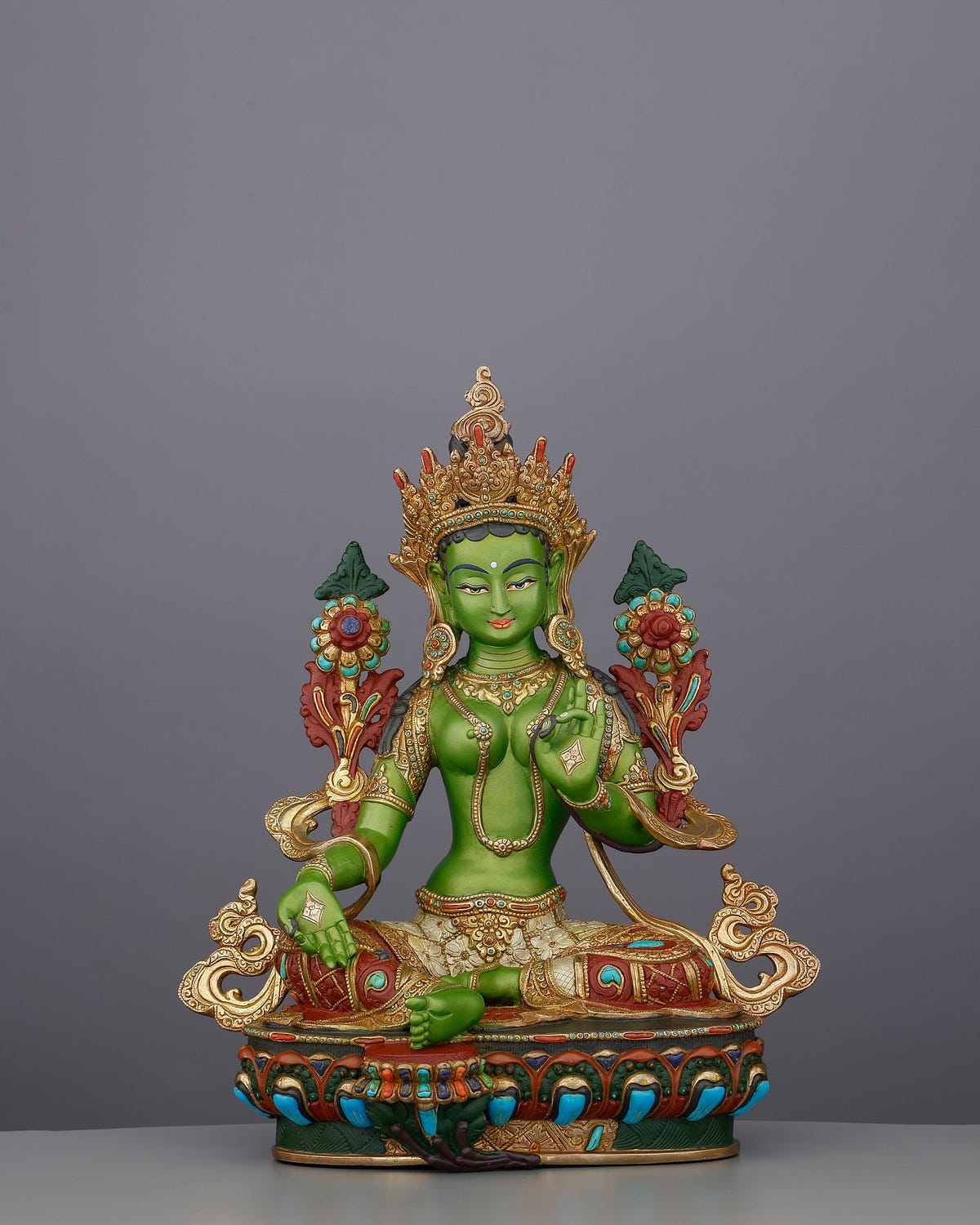
This is why the Newari masters of Patan — the Shakya and Vajracharya artisans who have practiced their craft for over a thousand years — bring such rigorous precision to the proportions outlined in the Pratimana Shastra. A finger too long, a crown insufficiently detailed, a mudra positioned incorrectly: these are not aesthetic failures but doctrinal ones. The statue must be a perfect mirror of the deity’s awakened form.
One Dharma, Three Doors
The great 14th-century Tibetan master Tsongkhapa wrote that the three vehicles are like three doors into the same great hall: each door opens from a different direction, but they all lead to the same spacious room.
A practitioner in any of the three schools takes refuge in the same Buddha, commits to the same ethical foundation, and cultivates the same essential qualities — clarity, compassion, and wisdom. The differences are not contradictions. They are accommodations to the extraordinary diversity of human beings: our different capacities, temperaments, cultural contexts, and karmic propensities.
Theravāda offers the path of the elder: rigorous, time-tested, clean in its simplicity.
Mahāyāna opens the path to the stars: vast compassion, boundless aspiration, a universe populated with beings of light.
Vajrayāna offers the path of the alchemist: working directly with what is, transforming the very stuff of confusion into the gold of awakening.
None is lesser. All are necessary.


