

The Man Before the Myth
Most of us encounter the Buddha as an image — a serene figure seated in stillness, eyes half-closed, hands resting in quiet certainty. We see him on temple altars, gallery walls, and living room shelves across the world. But behind that composed, golden form is a man who once paced palace courtyards in silk robes, who had never once gone to bed hungry, and who — against every comfort and expectation — chose to walk away from all of it.
This is that story.
A Child the Stars Couldn’t Ignore
Somewhere in the foothills of what we now call Nepal, roughly 2,500 years ago, a boy was born into royalty. His people were the Shakyas — a proud warrior clan — and he would one day be remembered as Shakyamuni, the wise one who came from among them. But long before that title, he was simply a baby whose birth caused enough stir to summon an astrologer to the palace.
The astrologer studied the child and delivered a verdict that thrilled and terrified his father in equal measure: this boy, he said, would either command kingdoms or illuminate the human mind. The king heard both possibilities — and quietly chose to ensure only one of them came true.
He named his son Siddhartha. In the old language, it meant something like “the one who accomplishes what he sets out to do.” He could not have known how precisely that name would fit.
The World Behind the Walls
The king’s plan was elegant in its simplicity: if his son never encountered suffering, he would never feel compelled to go looking for answers to it. And so Siddhartha grew up in a world that had been carefully curated for his contentment. The gardens were always in bloom. The music never stopped. The food was always plentiful. Old age, illness, grief — these were concepts that existed somewhere beyond the palace gates, in a world Siddhartha was never supposed to see.
For twenty-nine years, it worked.
What He Saw When the Gates Opened
Then one day — or rather, across four days — everything unraveled.
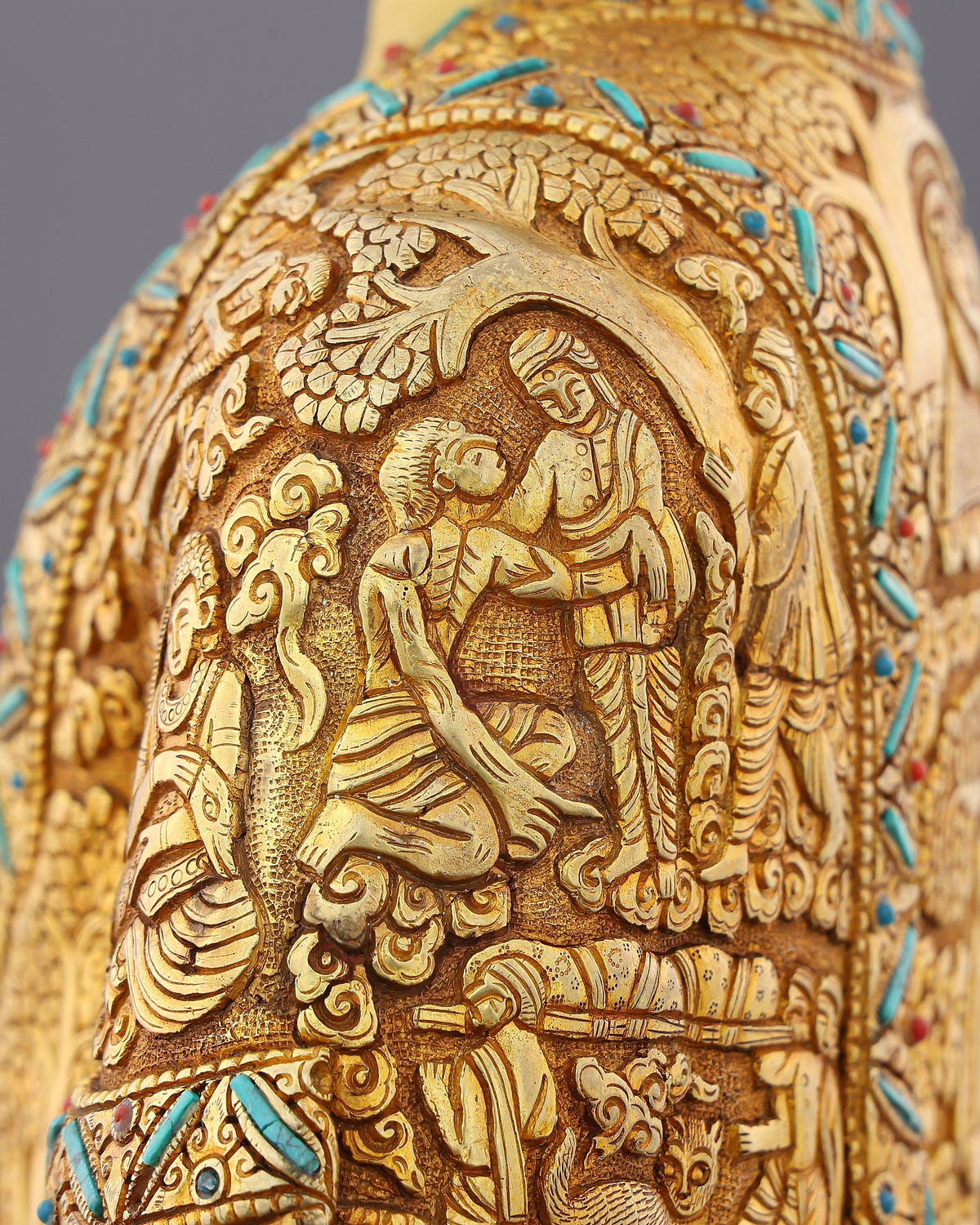
Siddhartha ventured beyond the palace walls and met, for the very first time, a man bent double with age, moving slowly through the street. On a second journey, he came across someone consumed by illness, their body a map of pain. On the third, he witnessed a funeral procession — the stark, undeniable fact of death, laid out before him in the open air.
He returned to the palace each time shaken. The world was not what he had been shown. People suffered. People decayed. People died. And no amount of music or gardens could change that.
On his fourth journey outside, he crossed paths with a wandering monk — ragged, possessionless, but carrying something in his bearing that Siddhartha couldn’t name. A kind of peace that had nothing to do with circumstances. It stopped him cold.
That night, he did not sleep. By morning, he had made his decision.
The Exit No One Saw Coming
He left before dawn, without a word to his family. He sent his horse back to the stable with his servant, removed his jewelry, shed his royal garments, and stepped into the world as an ordinary man. Not as a fugitive — as a seeker.
What followed were six years that would have broken most people. Siddhartha joined communities of ascetics who believed that freedom from desire could be achieved by punishing the body into submission. He fasted until he was skeletal. He sat motionless through monsoons. He pushed himself to the outermost edge of human endurance — and found nothing waiting there except the real possibility of death.
The breakthrough, when it came, arrived not through deprivation but through a simple bowl of food offered by a stranger. As he ate, a clarity settled over him. Neither excess nor starvation held the answer. The path had to run somewhere between them.
He called it The Middle Way.
The Night That Split History
Siddhartha made his way to a quiet stretch of land in what is now the Indian state of Bihar. He sat beneath a large fig tree, settled his body into stillness, and resolved not to move until he understood.
The tradition tells us that what followed was a night of profound internal battle — every fear, craving, and doubt he had ever carried rising up to pull him back from the edge of understanding. He met each one and did not flinch. As the darkness gave way to the first grey light of morning, something opened. The wandering stopped. He saw.
At thirty-five years old, Siddhartha Gautama became the Buddha — the one who is awake. The place where he sat, now called Bodh Gaya, remains one of the most sacred destinations on earth.
The Teacher Who Walked Everywhere
He could have remained in that quiet. He didn’t.
Instead, he walked — for forty-five years — across the length and breadth of northeastern India, speaking to anyone who would listen. Farmers and philosophers. Merchants and monks. He spoke in a language people could understand, about things they already knew: that life involves suffering, that suffering has causes, and that those causes can be addressed. He insisted he was not a god. He was a man who had found something and was trying to share it.
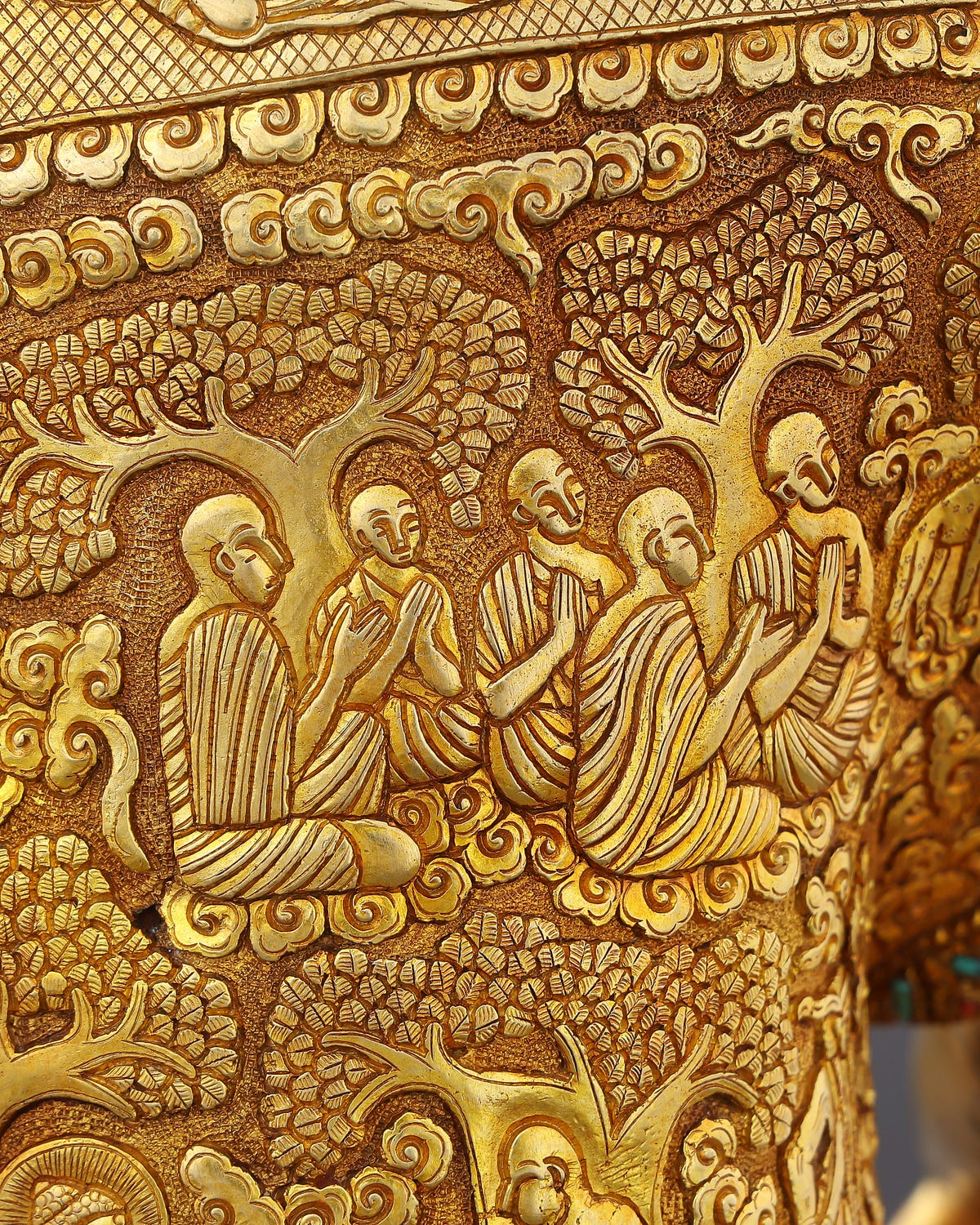
His first formal teaching took place in a deer park outside the ancient city of Benares, before a small group of fellow seekers who had once dismissed him. They became his first students. Thousands more followed.
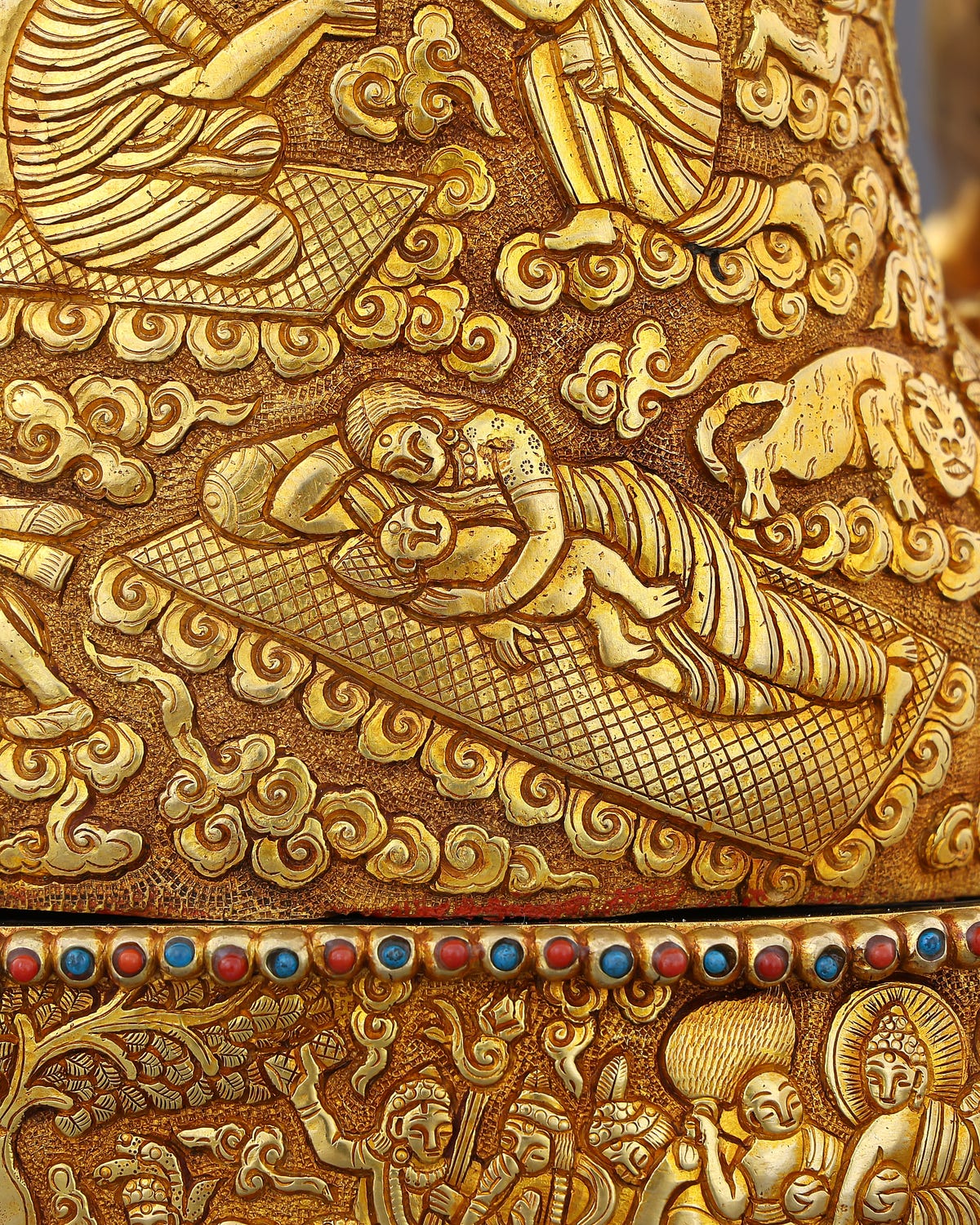
He died in his eightieth year in a town called Kushinagara, after a final meal that did not agree with him — a quietly human end for someone the world would eventually regard as transcendent. His remains were distributed among his communities and enshrined, becoming the seeds of sacred sites that pilgrims still travel to visit today.
How Art Preserves the Story
Centuries after his death, Buddhist scholars and artists began the task of organizing the Buddha’s biography into a form that could be taught, remembered, and depicted. By the time of the Pala Empire — which flourished across northern India between roughly the 8th and 12th centuries — this had crystallized into what became known as the Eight Great Events: the defining chapters of the Buddha’s life rendered in stone, paint, and bronze across the entire Buddhist world.
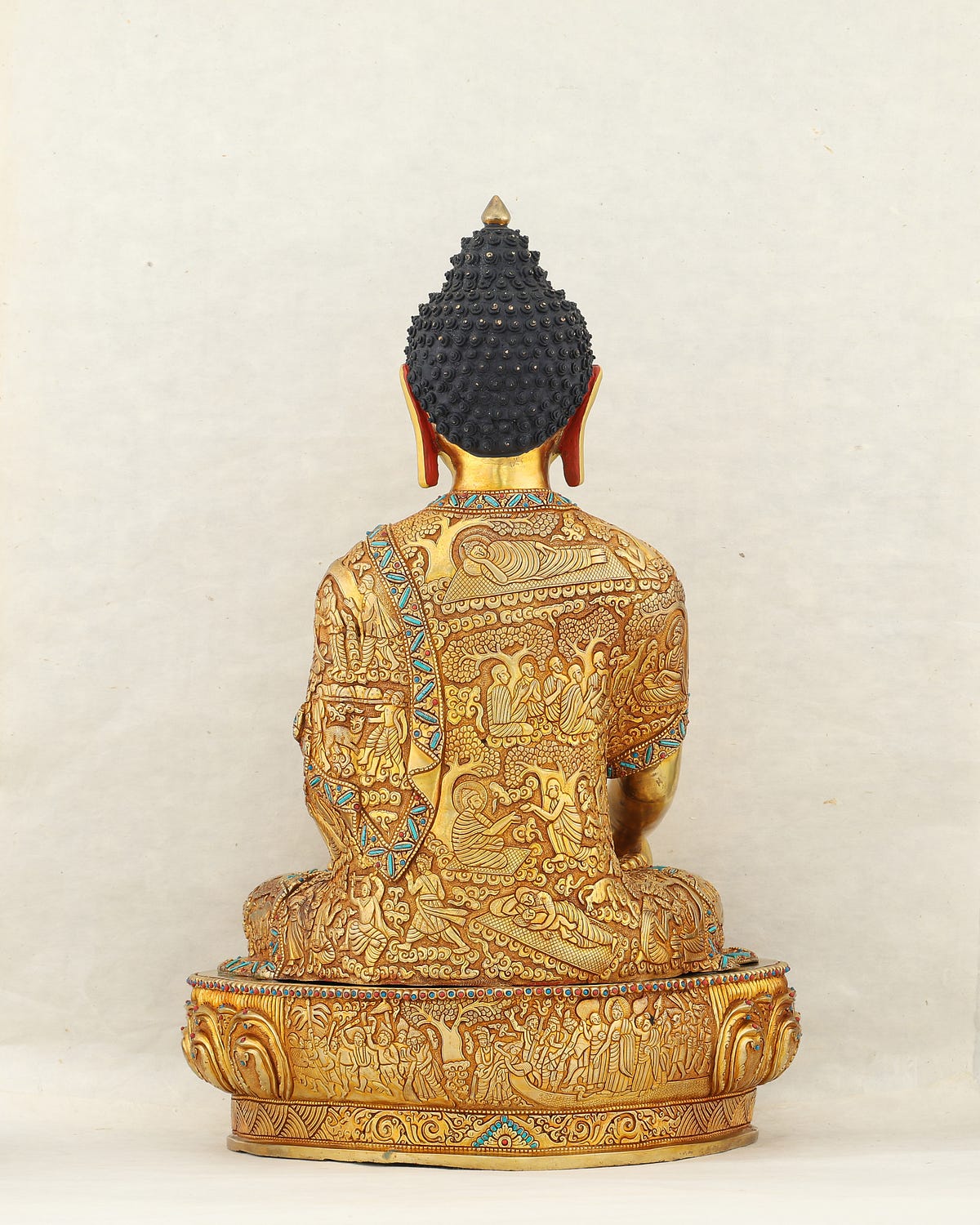
These eight moments — his birth, his enlightenment, his first sermon, the miracles he performed, his descent from a celestial realm, his taming of a rampaging elephant, the offering of honey by a monkey, and his final passing — became the visual vocabulary of Buddhist sacred art. Every gesture in a Buddha statue, every scene on a temple wall, every narrative thangka painting draws from this biography. The art is the story made visible.
Why This Story Belongs to Everyone
The life of the Buddha is not really a story about religion — or not only that. It is a story about the universal human experience of waking up to the world as it actually is, rather than as we’ve been told it should be. It is about the courage to ask uncomfortable questions and the discipline to sit with them long enough for something true to emerge.
It is also, unexpectedly, a story about generosity. Having found what he was looking for, Siddhartha could have kept it to himself. Instead, he spent half a lifetime giving it away freely, walking dusty roads in worn sandals, speaking to whoever was in front of him.
That spirit of understanding offered with open hands, is the heart of everything we do at Vajraicon. Our collection of Buddhist art and sacred iconography is built on the belief that these images deserve to be understood, not just admired. When you know the life behind the figure, the figure stops being decoration and becomes a doorway.


