

While most of the world pops champagne on January 1st, millions across the Himalayas wait patiently for their real celebration — a festival so vibrant, so spiritually charged, and so steeped in meaning that it makes Western New Year’s Eve look like a quiet Tuesday night.
Welcome to Losar, the Tibetan New Year.
This isn’t just a date change on the calendar. It’s a complete spiritual reset, a cultural explosion of color and devotion, and a time when the boundary between the mundane and sacred becomes deliciously thin.
Whether you’re planning to celebrate Losar yourself, curious about Tibetan culture, or simply seeking meaningful ritual in an increasingly secular world, understanding this festival opens a window into one of humanity’s most profound approaches to time, renewal, and intentional living.
What Exactly Is Losar?
Losar (ལོ་གསར་) literally translates to “New Year” in Tibetan — “Lo” meaning year and “Sar” meaning new. But this simple translation barely captures the festival’s depth.
Losar typically falls in February or March, determined by the Tibetan lunar calendar. The exact date changes annually, usually coinciding with the new moon between late January and early March. In 2026, Losar begins on February 17th, ushering in the Year of the Fire Horse.
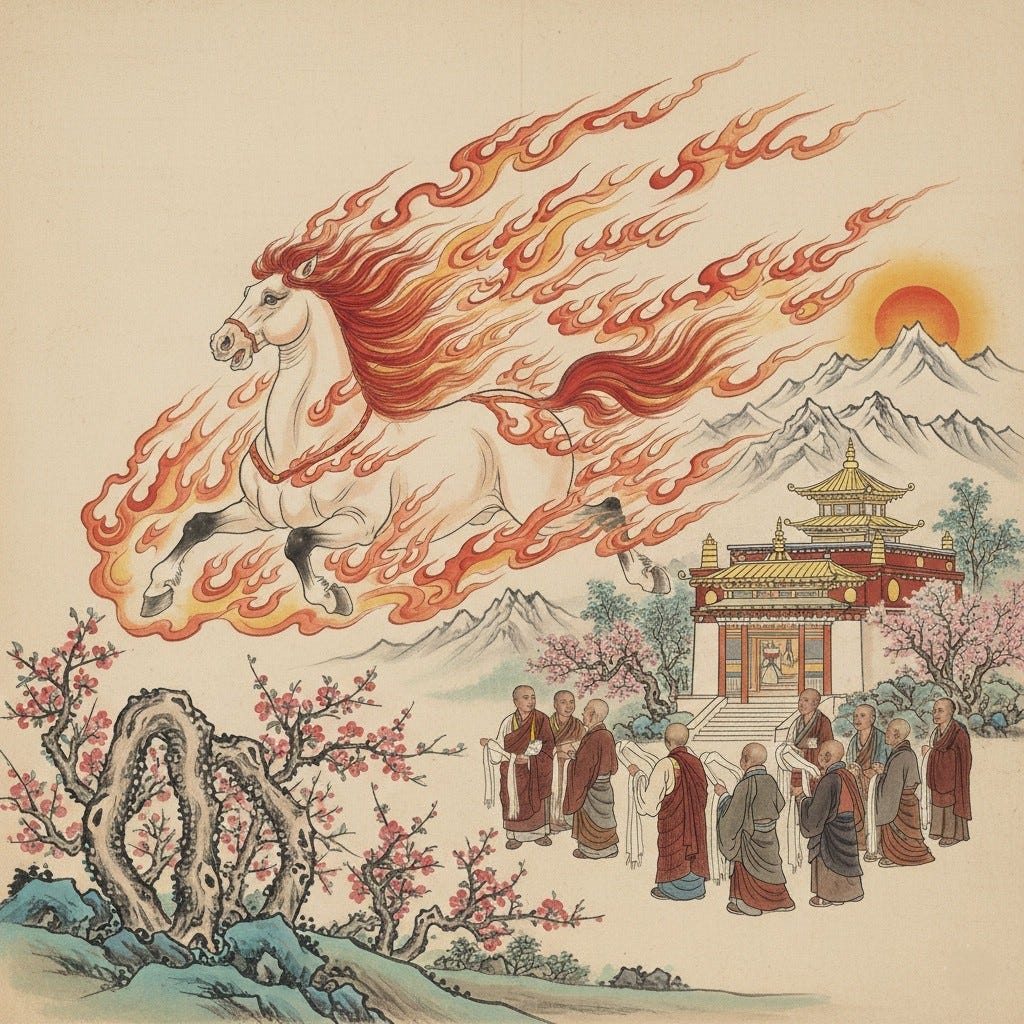
The celebration doesn’t last just one night. Traditional Losar festivities span fifteen days, with the first three days being the most intensive and significant. Think of it less as New Year’s Eve and more as New Year’s Season — a sustained period of renewal, reunion, and spiritual rededication.
But here’s what makes Losar truly distinctive: it’s simultaneously a cultural celebration, a religious observance, and a practical fresh start. Tibetans don’t separate these aspects. The spiritual and the everyday interweave so thoroughly that you can’t tell where one ends and the other begins.
The Ancient Roots: Where Losar Came From
Losar’s origins stretch back over 2,000 years, predating Buddhism in Tibet.
Originally, Losar was a winter incense-burning ceremony to appease local deities and spirits. Ancient Tibetans, living in one of the world’s harshest environments, understood something profound: you don’t just survive winter through physical preparation alone. You need spiritual alignment with the forces around you.

When Buddhism arrived in Tibet around the 7th century, rather than replacing Losar, it absorbed and enriched the festival. Buddhist practices layered onto older traditions, creating the complex, beautiful ceremony we see today — part ancient animism, part Buddhist philosophy, all distinctly Tibetan.
King Songtsen Gampo, who introduced Buddhism to Tibet, is credited with formalizing many Losar traditions. Later rulers added their own elements. By the time of the Fifth Dalai Lama in the 17th century, Losar had evolved into the comprehensive spiritual and cultural event still celebrated today.
The result? A festival that honors Tibet’s pre-Buddhist past while fully embracing Buddhist teachings — a perfect metaphor for integration rather than erasure.
Why the Date Moves: Understanding the Tibetan Calendar
Unlike the fixed Gregorian calendar, the Tibetan calendar dances to lunar rhythms.
The Tibetan year follows a lunisolar system, meaning it tracks both moon phases and solar years. Each month begins with the new moon, and periodic adjustments keep the calendar aligned with seasons. It’s complex, requiring astronomical calculations that Tibetan monks have mastered over centuries.
This lunar connection isn’t arbitrary. Tibetan Buddhism recognizes that natural cycles — moon phases, seasonal transitions, planetary movements — influence human consciousness and spiritual receptivity. Certain practices are more powerful during specific lunar phases. Losar arrives when celestial conditions favor new beginnings.
The Tibetan calendar also cycles through twelve animals (similar to Chinese zodiac) and five elements (wood, fire, earth, metal, water), creating sixty-year cycles. Each year carries specific energetic qualities. Understanding your birth year’s animal and element provides insight into your character and destiny — a bit like astrology, but more integrated with spiritual practice.
The Deep Preparation: Gutor and Spiritual Housecleaning
Losar doesn’t begin on New Year’s Day. The real preparation starts days earlier with Gutor, literally “29th day” — the last two days of the old year.
This is when things get spiritually serious.
Physical Purification
Tibetan households engage in the most thorough cleaning imaginable. Every corner is swept, every surface scrubbed, every possession examined. But this isn’t just about dust removal — it’s symbolic purification. You’re clearing out the old year’s accumulated negative energy, bad luck, and spiritual debris.
Homes are often painted or repaired. New clothes are prepared. Everything old and broken gets fixed or discarded. The message is clear: you don’t carry last year’s problems into the new year if you can help it.
Gutor Special Soup
On the 29th day, families prepare Gutor soup (Gutuk), a dumpling soup with a twist. Some dumplings contain symbolic items — chili peppers, wool, charcoal, salt, paper. Whatever you get in your dumpling supposedly reflects your character or fortune. Get the chili? You’re hot-tempered. Get the wool? You’re gentle-hearted. Get the charcoal? Well, you might need to work on that heart of yours.
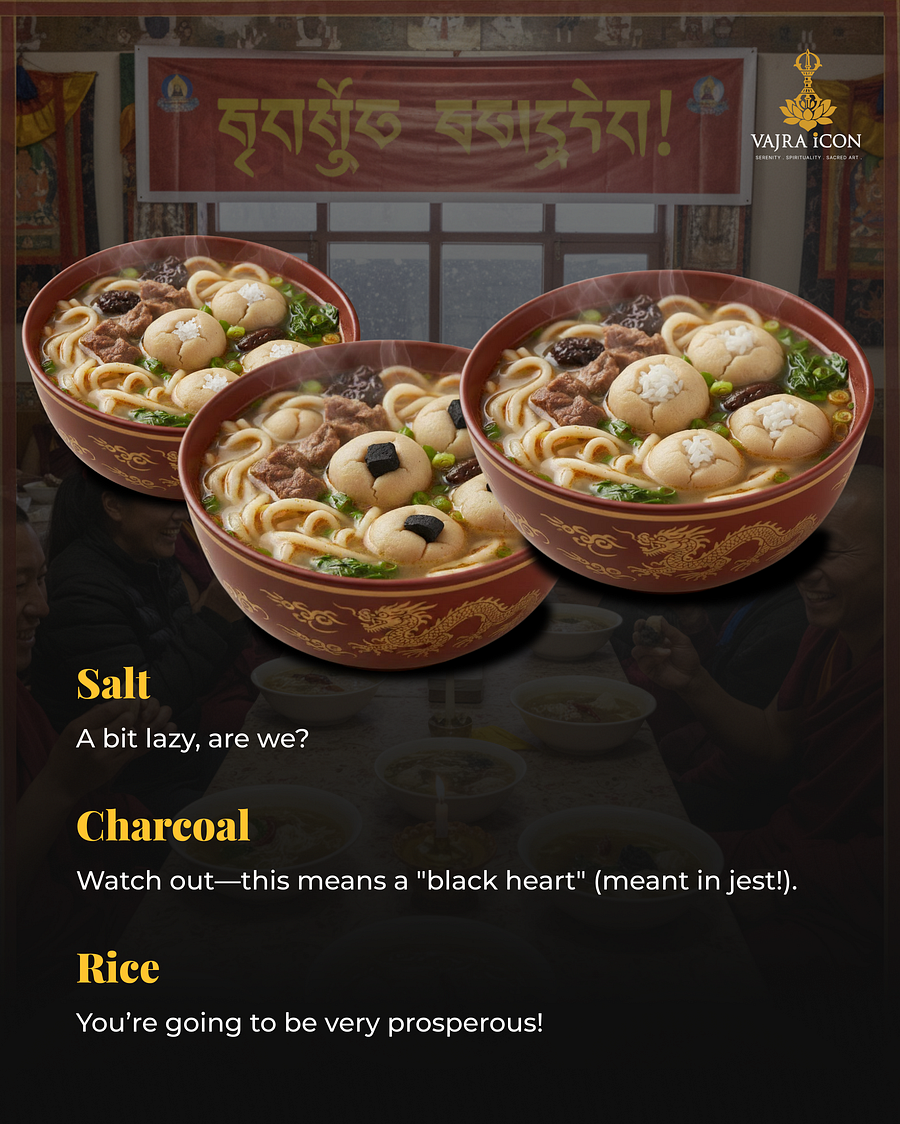
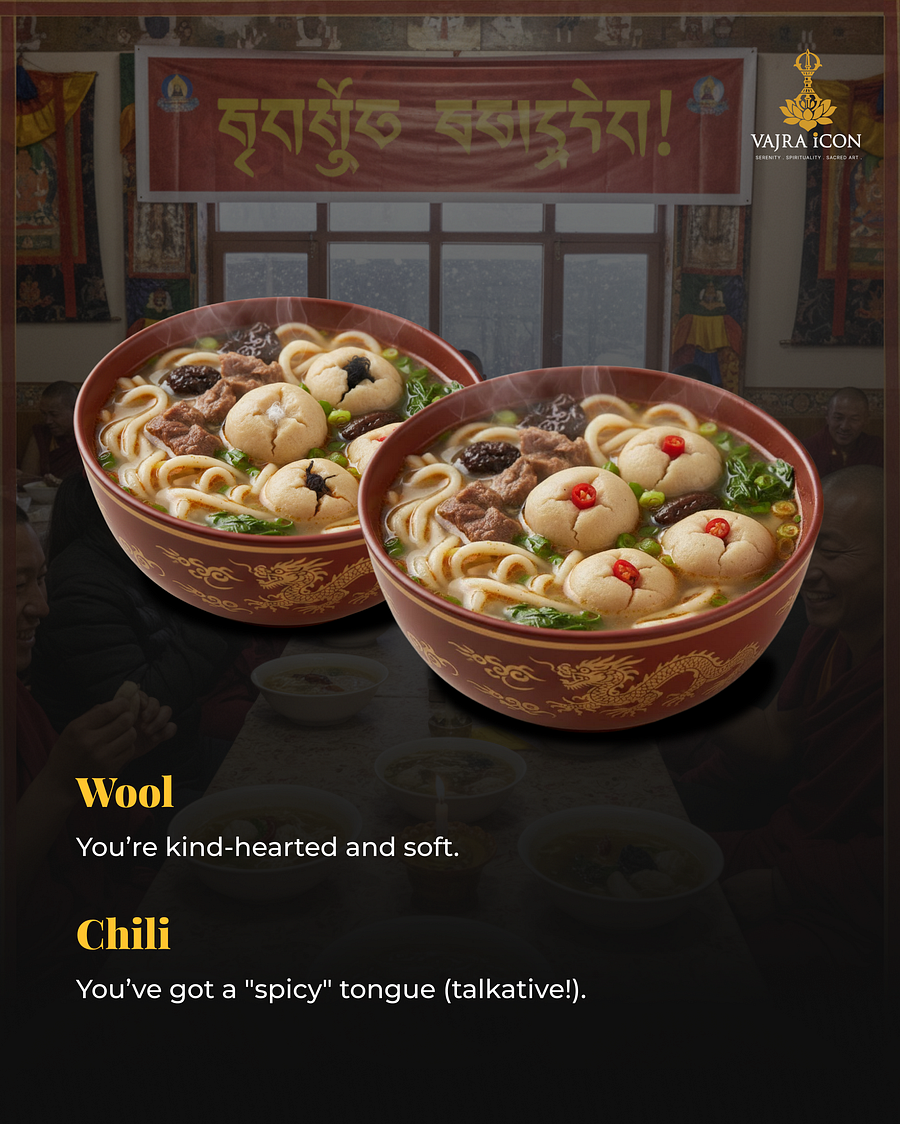
It’s humorous and profound simultaneously — using food to deliver gentle truths about self-improvement.
Driving Out Demons
Here’s where it gets theatrical. On the evening of the 29th, many communities perform torch-lit ceremonies to drive out negative spirits and obstacles from the old year. Monks create ritual tormas (sculptures from barley flour and butter) representing all the year’s negativity, then ceremonially destroy or burn them.
In some regions, a person dresses as a scapegoat figure, ritually absorbing the community’s collective bad fortune, then runs into the wilderness, symbolically carrying away all negativity. The community shouts, bangs pots, lights firecrackers — making as much noise as possible to chase away malevolent forces.
By the time Losar morning arrives, you’re energetically scrubbed clean and ready for renewal.
Losar Day One: The Sacred Beginning
When Losar morning finally dawns, the first day follows precise, meaningful rituals.
Pre-Dawn Rising
Devout families wake before sunrise — the earlier, the better. The first light on the first day of the new year holds a special blessing. Many make offerings at their home altar immediately upon waking, before doing anything else. First actions set the tone for the entire year.
Changkol: The First Offering
The family gathers around a special container called Changkol — an elaborately decorated wooden box divided into compartments. Each section holds significant items: tsampa (roasted barley flour), barley seeds, wheat, dried fruit, butter, and sweets.
The head of household offers this to family members while reciting auspicious phrases: “Tashi Delek!” (Good fortune!) The gesture isn’t just about the food — it’s blessing the family with abundance, health, and prosperity for the coming year.
Dresil or Changkol Drinking
Family members sip changkol — a special drink made from fermented barley (similar to beer) or butter tea mixed with barley flour. This ritual consumption symbolizes unity and shared fortune. You’re quite literally consuming blessings together.
First Temple Visit
After home rituals, families dress in finest traditional clothing — women in elaborate striped aprons (pangden) and men in traditional robes (chuba) — and head to monasteries or temples. The first temple visit of the year is crucial. You’re reaffirming your spiritual commitment, making merit, and seeking blessings for the months ahead.
Monasteries are packed, vibrant with prayer flags, burning juniper incense, and the deep resonance of monks chanting. The air literally shimmers with devotion.
Days Two and Three: Community and Celebration
The second and third days shift focus from spiritual observance to community connection.
Gyalpo Losar (King’s Losar)
Day two is traditionally when government and community leaders host or attend official celebrations. Historically, this was when the Dalai Lama would receive officials and foreign dignitaries.
Today, Tibetan communities worldwide hold public celebrations on this day — cultural performances, traditional dances, communal feasts. It’s about reinforcing social bonds and cultural identity.
Choepa Losar (Religious Losar)
The third day focuses on religious observances. Many people visit multiple monasteries, make offerings, and spend extended time in prayer or meditation. Some undertake pilgrimages or circumambulations around sacred sites.
This three-day structure is brilliant: day one centers the individual and family, day two expands to community, day three returns to spiritual depth. It’s a complete ecosystem of renewal.
The Symbolic Foods That Define Losar
Tibetan culture speaks through food during Losar, and every dish carries meaning:
Khapse
These deep-fried cookies shaped into elaborate designs are ubiquitous during Losar. Different shapes have different names and significance. They’re stacked into impressive towers on family altars and offered to guests. Making khapse is an art form, with family recipes passed down generations.
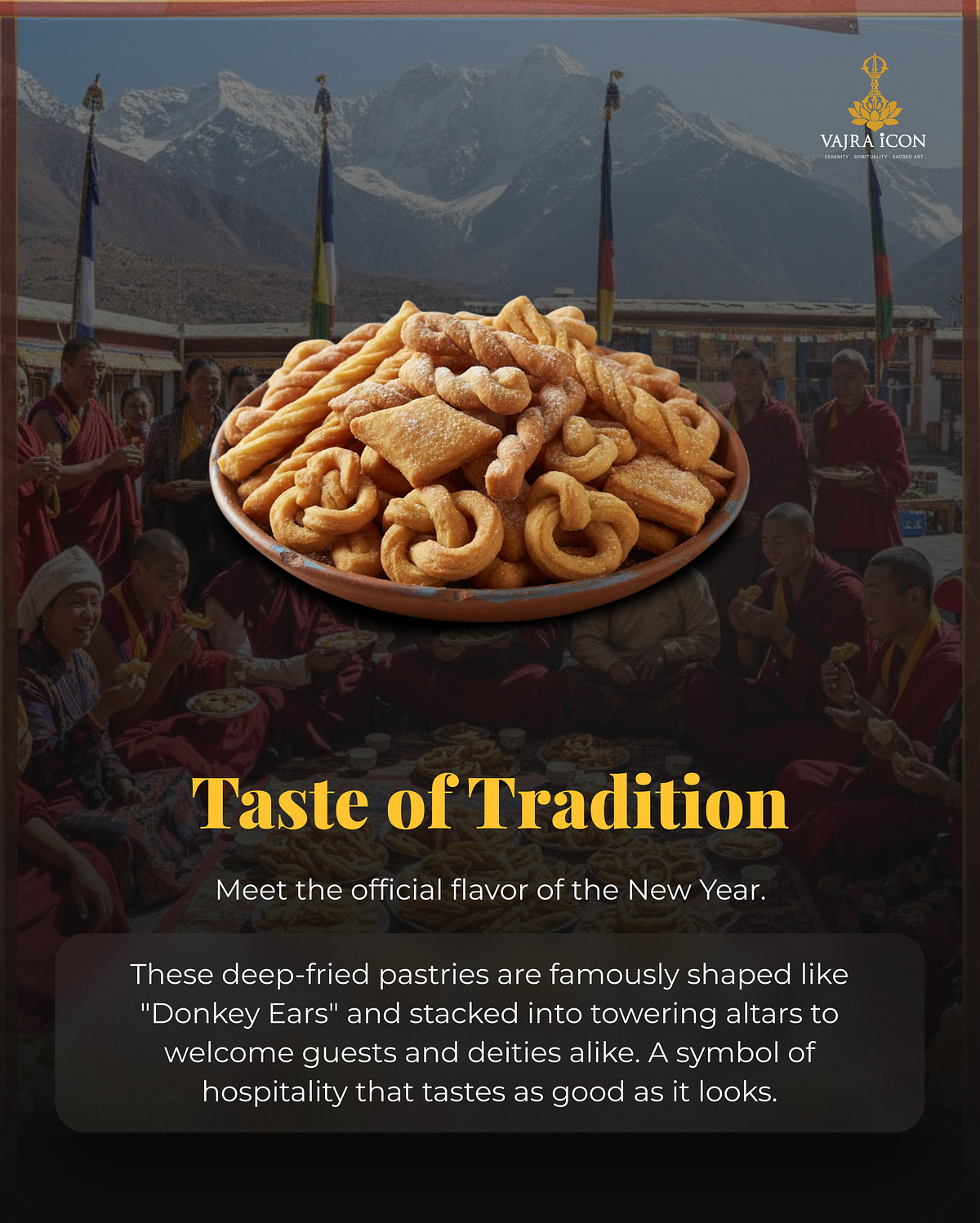
The abundance of khapse symbolizes prosperity. The more elaborate your display, the more fortune you’re inviting.
Guthuk (Gutor Soup)
As mentioned earlier, this dumpling soup eaten on Gutor contains surprise fillings revealing character traits. It’s playful fortune-telling that brings families together in laughter.
Changkol
Beyond the ceremonial container, changkol also refers to the barley beer consumed throughout festivities. Shared drinking isn’t about intoxication — it’s about communion, blessing, and celebration.
Dre-si
A sweet rice dish mixed with butter, sugar, and dried fruit. Its richness symbolizes the sweet life you’re hoping for in the coming year.
Food during Losar isn’t mere sustenance. Its symbolic communication, cultural transmission, and spiritual practice all rolled into one delicious package.
Why Losar Matters in the Modern World
You might wonder: why should anyone outside Tibetan culture care about Losar?
Here’s why this ancient festival remains profoundly relevant:
Intentional Reset
Modern culture gives us New Year’s resolutions that usually fail by February. Losar offers a different model — comprehensive spiritual and physical preparation before the new year even starts. You don’t just decide to change; you purify, prepare, and align yourself for change.
Community Over Individualism
While Western New Year’s often means packed bars and Instagram posts, Losar centers family and community. It reminds us that individual renewal happens best within strong social bonds.
Spiritual Integration
Losar doesn’t separate “religious” from “everyday” life. Cleaning your house is spiritual practice. Sharing food is meditation. Beauty and devotion are inseparable. This integration offers an antidote to modern fragmentation.
Cyclical Time
The Tibetan calendar recognizes time as cyclical, not just linear. You’re not just moving forward — you’re completing circles, returning transformed. This perspective offers comfort and wisdom, especially during difficult periods.
Cultural Resilience
For Tibetans in diaspora — displaced from their homeland since 1959 — Losar is an act of cultural survival. Celebrating Losar preserves identity, transmits culture to younger generations, and maintains continuity despite displacement. There’s profound courage in continuing to celebrate your new year when you can’t return to your homeland.
How to Honor Losar (Even If You’re Not Tibetan)
Interested in incorporating Losar wisdom into your own life? Here’s how to approach it respectfully:
Learn and Appreciate
Understanding Losar’s significance deepens appreciation for Tibetan culture. This knowledge itself is valuable, expanding your worldview.
Deep Clean with Intention
Adopt the Gutor practice of thorough physical and energetic cleaning before your own new year. Ask yourself: what from last year needs releasing? What broken things need fixing? Make cleaning a meditation.
Create Renewal Rituals
Develop your own meaningful new year practices — morning offerings, family gatherings, temple or nature visits. Ritual provides structure for transformation.
Support Tibetan Communities
If you want to celebrate Losar, attend public celebrations hosted by Tibetan cultural centers. Your respectful presence and support matter. Consider purchasing authentic Tibetan goods from Tibetan-owned businesses.
Practice Generosity
Losar emphasizes giving — to temples, to the poor, to family. Incorporate this by making donations or volunteering during your new year period.
Invest in Sacred Art
Many people choose Losar as the time to acquire or commission sacred statues or thangkas for their practice space — beginning the new year by inviting blessings into their homes.
The Statues That Grace Losar Altars
During Losar, Tibetan homes and monasteries showcase their most precious sacred objects, and statues hold places of honor.
Fresh offerings surround deity statues — flowers, lights, water bowls, food, incense. These aren’t just decorations; they’re active offerings to enlightened beings, invitations for blessings to enter the home throughout the coming year.
Many families choose Losar as an auspicious time to acquire new statues for their altars. Starting the year with a fresh representation of Buddha, Tara, or one’s personal Yidam is considered especially fortunate. The statue becomes a focal point for the year’s spiritual aspirations.
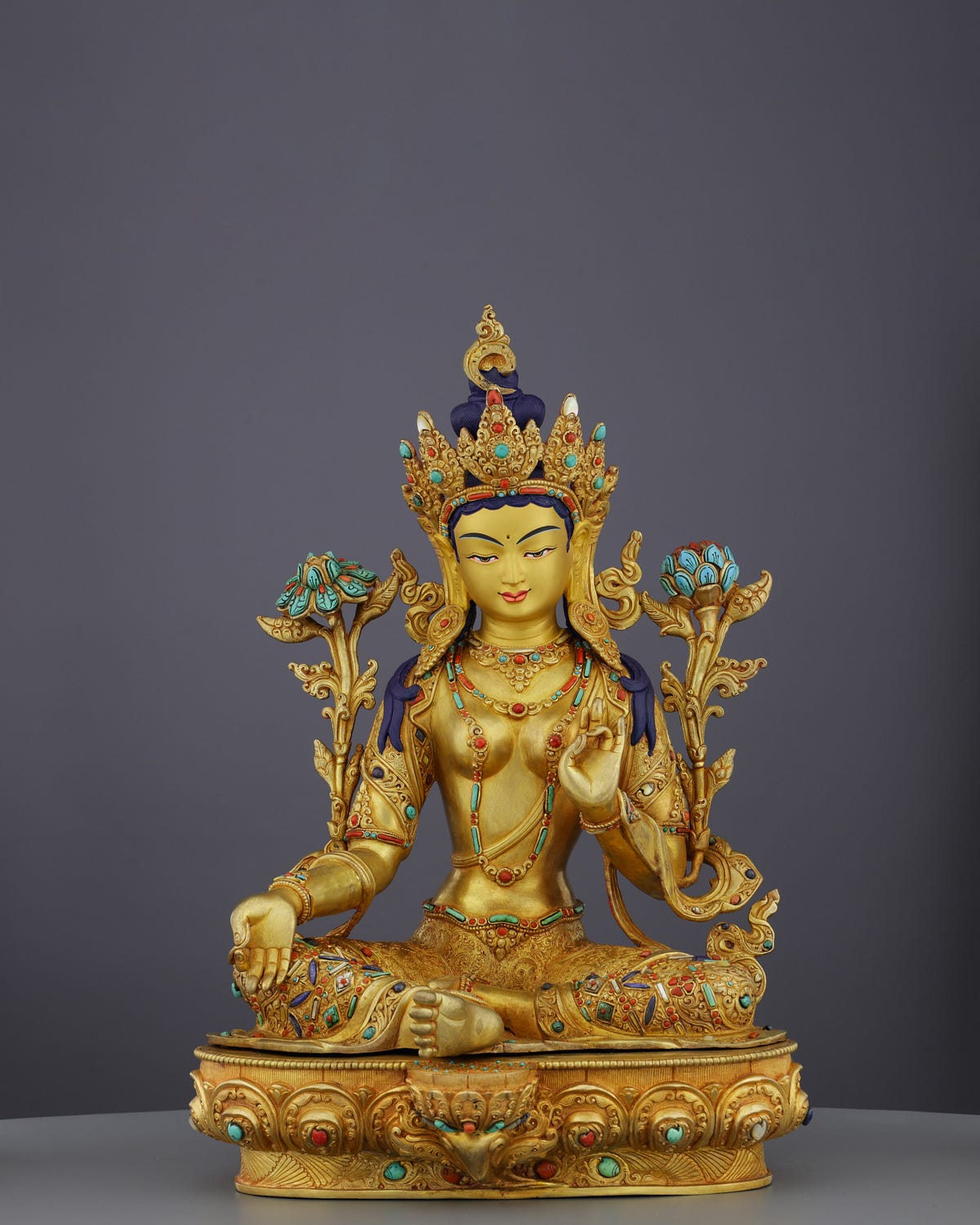
This is why quality matters profoundly. A mass-produced statue might serve decorative purposes, but a traditionally crafted piece — made with proper proportions, iconographic accuracy, and sacred intention — becomes a genuine support for practice throughout the coming year.
The statue you place on your altar at Losar becomes your meditation companion for the next twelve months. Choose wisely.
Losar in Diaspora: Celebration as Resistance
Since the Chinese occupation of Tibet in 1959, millions of Tibetans have lived in exile — primarily in India, Nepal, and Western countries.
For these displaced communities, Losar has taken on additional significance. It’s not just cultural celebration — it’s an assertion of identity, a refusal to disappear, a transmission of heritage to children who may never see their ancestral homeland.
Tibetan refugees gather in huge numbers for Losar celebrations in Dharamsala, Kathmandu, New York, Toronto, London. They wear traditional dress, speak Tibetan, perform ancient dances, and cook traditional foods. For one sustained period, they rebuilt Tibet in the diaspora.
The Dalai Lama delivers an annual Losar message addressing the Tibetan people worldwide. His words emphasize hope, resilience, cultural preservation, and the nonviolent struggle for Tibetan autonomy.
Celebrating Losar becomes a political act — a gentle but firm statement that Tibetan culture continues despite displacement, that identity persists despite oppression, that new years keep coming even when returning home seems impossible.
This dimension adds weight and poignancy to every Losar ritual.
Your Invitation to Meaningful Renewal
Losar offers something increasingly rare in modern life: a template for profound, comprehensive renewal.
Not just the shallow “new year, new me” that fades by February, but deep, spiritually grounded transformation that touches every level of existence — physical space, family relationships, community bonds, spiritual practice, and inner consciousness.
The Tibetan approach recognizes that change requires preparation, that new beginnings need purification, that transformation happens best when supported by ritual, community, and sacred intention.
As another Losar approaches, you have a choice. You can let it pass as just another date on someone else’s calendar. Or you can engage with its wisdom — the cleaning, the offerings, the intentional gathering, the spiritual rededication.
You don’t need to be Tibetan to appreciate that after the darkness of winter, we all need rituals of light. After accumulated struggles, we all need practices of purification. After isolation, we all need festivals of community.
Losar reminds us that beginnings are sacred, that time is a blessing, and that renewal is always possible — if we prepare properly and celebrate wholeheartedly.
Tashi Delek! May the new year bring you good fortune, spiritual growth, and the courage to transform.


