

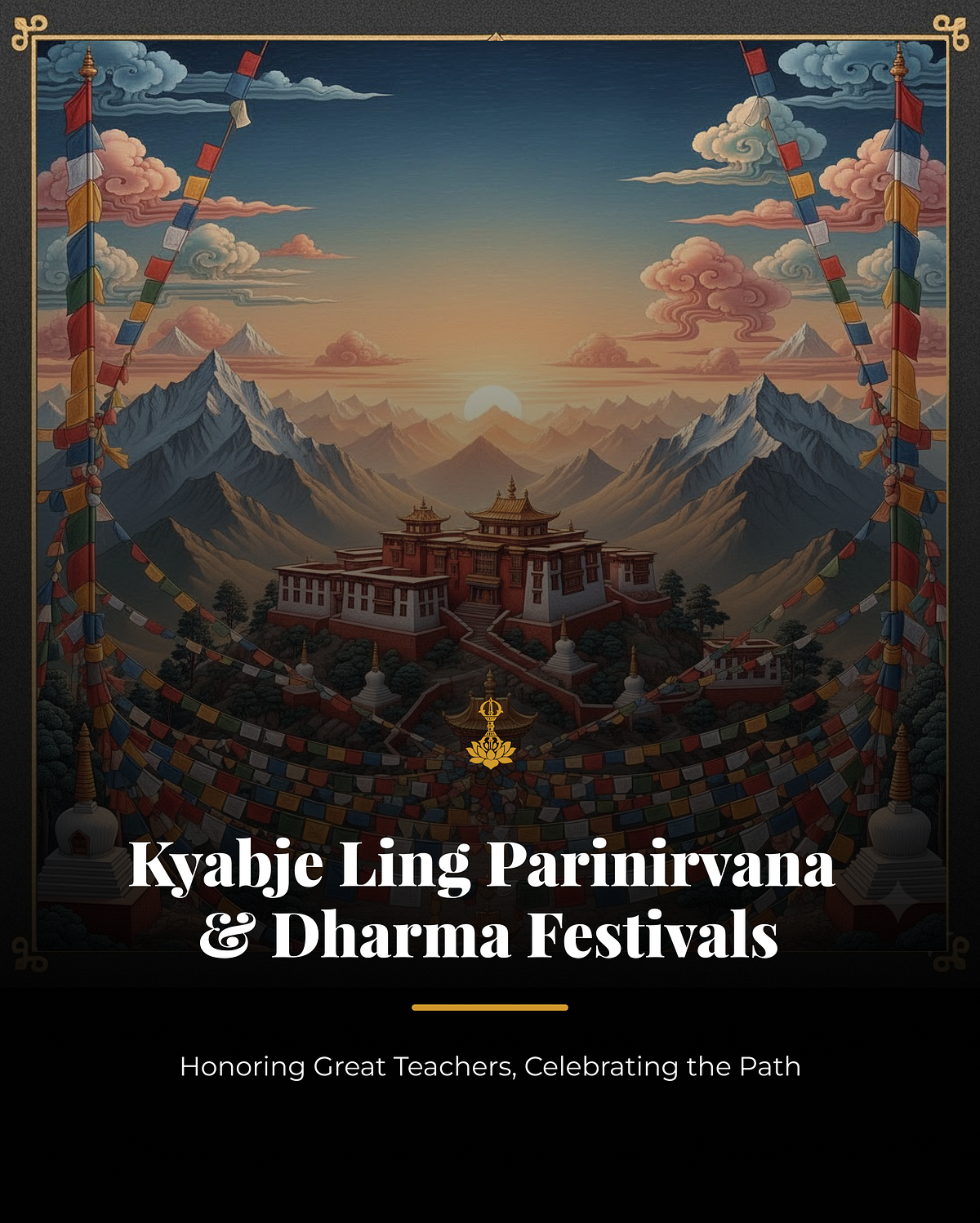
On December 25, 1983, something extraordinary happened in Dharamsala, India. His Holiness Kyabje Yongzin Ling Rinpoche — the senior tutor to the 14th Dalai Lama — passed away at age 81. But for thirteen days afterward, his body showed no signs of decay. His complexion remained fresh, and a warmth emanated from his heart.
According to witnesses and medical observers, he had entered thukdam — a profound meditative state that highly realized masters enter after clinical death, where consciousness remains unified with the clear light nature of mind. For nearly two weeks, while the world mourned, Kyabje Ling Rinpoche remained in deep meditation within his own passing.
This wasn’t just the end of a life. It was a demonstration of mastery over death itself.
Who Was Kyabje Ling Rinpoche?
To understand the significance of this master’s parinirvana, we need to understand who he was.
Born in 1903 in the sacred region of Kyisho near Lhasa — known as an abode of the deity Chakrasamvara — he was recognized at age seven as the reincarnation of the 5th Ling Rinpoche by His Holiness the 13th Dalai Lama. The recognition was confirmed by the state oracles of Nechung and Gadong, spiritual protectors who have guided Tibetan Buddhism’s major decisions for centuries.
What followed was a life of extraordinary scholarship and spiritual accomplishment. By age 21, after only twelve years of study, he earned his Geshe Lharampa degree — the highest academic qualification in Tibetan Buddhism, equivalent to a doctorate in philosophy and theology. Most monks take 20–25 years to achieve this.
But academic brilliance was just the beginning. Kyabje Ling Rinpoche became the principal tutor to His Holiness the 14th Dalai Lama, shaping the education and spiritual development of one of the world’s most influential religious leaders. The Dalai Lama himself has said: “Ling Rinpoche is not only my root guru in this life, but in life after life he will be my root guru caring for me with compassion until I attain enlightenment.”
In 1965, he was appointed the 97th Ganden Tripa — the supreme head of the Gelug school of Tibetan Buddhism — and held this position for 19 years, longer than any other occupant of this throne.
Understanding Parinirvana: The Ultimate Transition
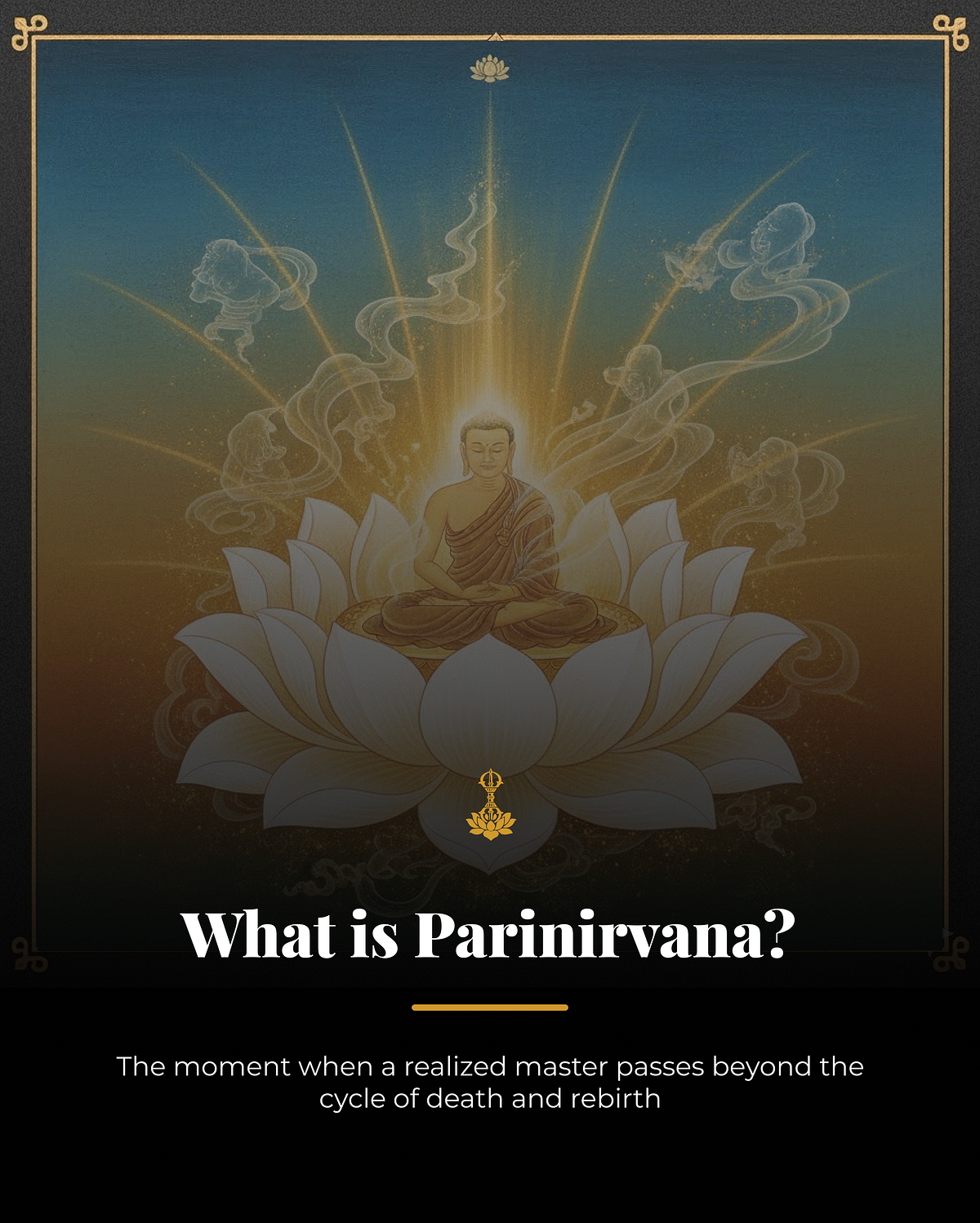
The word “parinirvana” literally means “complete nirvana” or “final liberation.” It’s the term used when a fully enlightened being passes away, marking not death in the ordinary sense, but the ultimate cessation of suffering and the complete realization of freedom.
When Buddha Shakyamuni passed into parinirvana over 2,500 years ago, it became one of the four great events commemorated in the Tibetan Buddhist calendar. The parinirvana of great masters like Kyabje Ling Rinpoche echoes this momentous occasion — reminding practitioners that death, for the realized, is not an ending but a culmination.
For ordinary beings, death is frightening — an uncontrolled transition marked by confusion and grasping. For accomplished practitioners who have spent lifetimes preparing, death becomes the ultimate opportunity. The clear light that arises at the moment of death is said to be the most direct encounter with reality itself. A master like Ling Rinpoche doesn’t flee from this moment; he rests in it, merging his realization with the luminous nature of awareness.
This is what thukdam represents: a master remaining in meditation on the clear light of death, demonstrating that consciousness transcends the physical body.
The Thirteen Days That Stopped Time
During those thirteen days in December 1983, an unusual atmosphere pervaded Dharamsala. His Holiness the Dalai Lama visited repeatedly, requesting his teacher’s continued presence and giving strength to those who gathered.
On December 22nd, just three days before his passing, the Dalai Lama gave a Vajrabhairava initiation to a large assembly. He told the grief-stricken audience that this would be the last time he would give this particular initiation during the lifetime of the teacher from whom he had received this lineage. But he consoled them, saying this was not cause for sorrow — he had received all of Kyabje Ling Rinpoche’s teachings fully and thoroughly.
After the parinirvana, the international Buddhist community rallied. Prayers and supplications poured in from around the world. Ceremonies were conducted continuously, honoring not just the man but what he represented: an unbroken lineage of realization stretching back to Buddha Shakyamuni himself.
When Kyabje Ling Rinpoche finally emerged from thukdam, the traditional cremation ceremonies could begin. But even in death, he continued to teach — his body remained remarkably preserved, showing signs that ordinary medical science struggles to explain but that the tradition understands as evidence of profound realization.
Dharma Festivals: When Time Becomes Sacred
In the Tibetan Buddhist calendar, certain days are recognized as Dharma Festivals — times when the effects of positive and negative actions are magnified exponentially. These aren’t arbitrary designations but days connected to pivotal moments in Buddhist history.
The parinirvana anniversaries of great masters like Kyabje Ling Rinpoche become part of this sacred calendar. December 25th — the date of his passing — is now observed annually by practitioners worldwide. Monks at monasteries make tsok offerings before his preserved body, which remains housed at His Holiness the Dalai Lama’s residence in Dharamsala.
Other major Dharma Festivals in the Tibetan calendar include:
Saga Dawa Düchen (15th day of the 4th month): Commemorates Buddha’s birth, enlightenment, and parinirvana — all three occurring on the same lunar date in different years. This is considered the holiest day of the year, when the karmic effects of actions are multiplied by 100,000.
Chötrul Düchen (15th day of the 1st month): Celebrates Buddha’s display of miracles, demonstrating the power of realized mind over ordinary physical reality.
Chökhor Düchen (4th day of the 6th month): Marks Buddha’s first teaching of the Four Noble Truths, the moment when the wheel of dharma was first turned.
Lhabab Düchen (22nd day of the 9th month): Commemorates Buddha’s descent from the divine realms after teaching his mother.
Ganden Ngamchö (25th day of the 10th month): Observes Je Tsongkhapa’s parinirvana, the founder of the Gelug tradition.
On these days, practitioners gather for special ceremonies, make extensive offerings, take vows, and engage in intensive practice. The understanding is that the spiritual “atmosphere” is particularly conducive to transformation — as if the boundary between ordinary and sacred reality becomes thinner.
Why Parinirvana Days Matter
You might wonder: why commemorate someone’s death? In many cultures, we honor birthdays and celebrate life, treating death as something to be quickly moved past.
Tibetan Buddhism takes a radically different view. Death isn’t the opposite of life; it’s its culmination. How we die reveals how we’ve lived. A peaceful, conscious death demonstrates a life well-practiced. A master’s parinirvana becomes a teaching in itself.
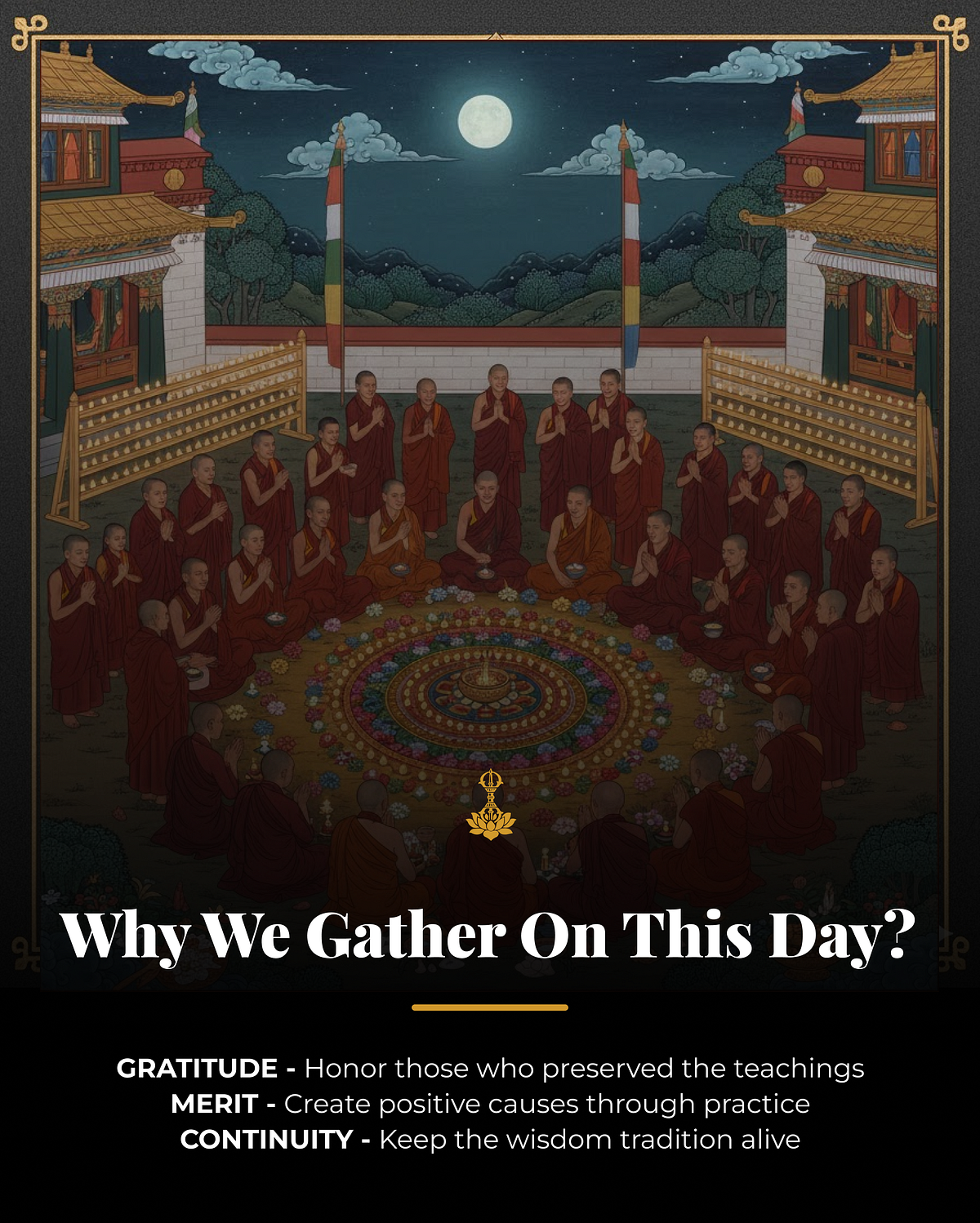
When practitioners observe the parinirvana anniversary of a great teacher, they’re doing several things:
Connecting with the Lineage: By remembering and honoring teachers like Kyabje Ling Rinpoche, practitioners strengthen their connection to the unbroken chain of transmission that preserves authentic Buddhist teachings.
Contemplating Impermanence: These anniversaries remind us that even the greatest masters are subject to the fundamental law of impermanence. This isn’t morbid but liberating — it cuts through our denial and motivates genuine practice.
Aspiring to Realization: The way these masters died — consciously, peacefully, even joyfully — demonstrates what’s possible with sustained practice. Their parinirvana becomes an inspiration and a roadmap.
Generating Merit: Making offerings and prayers on these auspicious days is believed to create vast positive karma, which supports both one’s own spiritual progress and the welfare of all beings.
The Return: Reincarnation and Continuity
The story doesn’t end with parinirvana. In 1985, just two years after Kyabje Ling Rinpoche’s passing, a boy was born in India. His Holiness the Dalai Lama recognized him as the unmistaken reincarnation of his beloved teacher.
This 7th Ling Rinpoche was taken to Drepung Monastic University at age five and began his rigorous training. By 2016, he had completed his Geshe degree. In 2004, when he turned 20, His Holiness the Dalai Lama gave him full monastic ordination — exactly 50 years after receiving those same vows from the 6th Ling Rinpoche.
The circle continues. The lineage persists. Death and rebirth become a dance of compassion, with realized beings choosing to return again and again for the benefit of others.
Today, the 7th Ling Rinpoche travels internationally, giving teachings and initiations, carrying forward the wisdom his predecessor embodied. When practitioners gather on December 25th to commemorate the parinirvana, they’re not just looking backward but acknowledging this ongoing continuity.
Practicing with Dharma Festivals
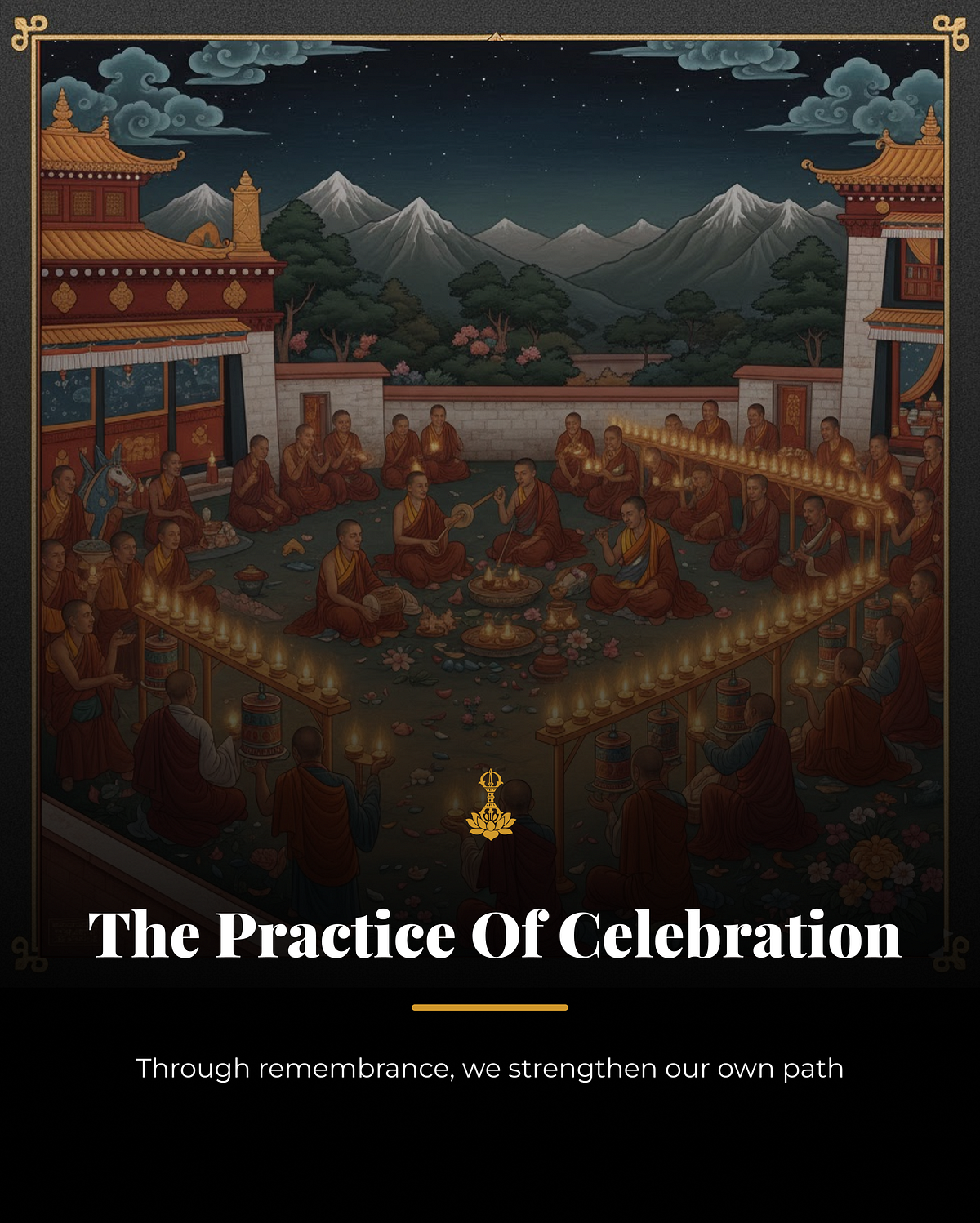
You don’t need to be Tibetan or even Buddhist to appreciate the wisdom embedded in these observances. The principle is universal: certain moments carry heightened significance, and how we meet them matters.
If you’re drawn to incorporating these practices into your life, consider:
Mark the Dates: Get a Tibetan lunar calendar and note the major Dharma Festivals. Even simple awareness these days can shift your consciousness.
Dedicate Your Practice: On festival days, make your meditation, prayers, or contemplation more focused. Dedicate the positive energy to all beings.
Make Offerings: Traditional offerings include light (candles or butter lamps), incense, flowers, food, and water. These represent giving and generosity — antidotes to grasping.
Study the Lives of Masters: Read about teachers like Kyabje Ling Rinpoche. Let their examples inspire and guide you.
Contemplate Impermanence: Use these anniversaries to reflect honestly on your own mortality. This isn’t depressing; it’s clarifying. It helps you identify what truly matters.
Connect with Community: If possible, attend ceremonies at a Buddhist center. Practicing together amplifies the energy and creates meaningful connections.
The Ultimate Teaching
Kyabje Ling Rinpoche’s life exemplified scholarship, devotion, and realized wisdom. But perhaps his greatest teaching was his death — or rather, his demonstration that for one who has truly practiced, death isn’t an ending to be feared but a transition to be met with clarity and even joy.
Those thirteen days of thukdam weren’t just a phenomenon for scientists to study or believers to marvel at. They were a gift — a visible reminder that consciousness is more than brain activity, that practice genuinely transforms how we meet reality, and that the great masters aren’t telling comforting lies when they say liberation is possible.
At Vajraicon.com, we honor this complete tradition — the teachings, the teachers, and the living lineage that continues through their reincarnations. We understand that authentic practice includes both the joy of festivals and the contemplation of parinirvana, both the celebration of life and the acceptance of death.
The Dharma Festivals marked on the Tibetan calendar aren’t just dates on a page. They’re invitations to step outside ordinary time and connect with something timeless. They’re reminders that some days call for special attention, deeper practice, and conscious dedication.
And the parinirvana of masters like Kyabje Ling Rinpoche? These aren’t merely historical events to be remembered but demonstrations of possibility to be aspired toward.
Every December 25th, when the world is celebrating another kind of holiday, practitioners gather to honor a different kind of gift — the life, teachings, and ultimate passing of a master who showed that death, met with awareness, can be the greatest teaching of all.
The question isn’t whether we’ll die. We will. The question is: how will we meet that moment? Will it be with fear and confusion, or with the clarity and peace of a life well-practiced?
Kyabje Ling Rinpoche spent his entire life preparing his answer. Through his parinirvana, he showed us what’s possible.
What answer are you preparing?


