

Twice a month, in monasteries across the Himalayan regions and beyond, Buddhist monks and nuns gather for a practice that’s both humbling and liberating. They sit together in silence, then one by one, they confess their transgressions. Not to a priest or deity, but to each other — to their sangha, their spiritual community.
This is Sojong, and it’s one of Buddhism’s most profound yet least understood practices.
In a world where we curate perfect online personas and hide our failures, where cancel culture replaces forgiveness, and where shame festers in silence — the ancient practice of Sojong offers a radically different path. It’s a path of transparency, renewal, and dignified acknowledgment of our humanity.
What is Sojong?
The word “Sojong” comes from the Tibetan term meaning “restoration” or “renewal” — specifically, the restoration of vows and the renewal of one’s commitment to ethical conduct. In Sanskrit, it’s known as Poshadha or Uposatha, practices that date back to the Buddha’s time over 2,500 years ago.
Held on the new moon and full moon days of each lunar month, Sojong is a ceremony where monastics gather to:
- Recite the monastic code (Pratimoksha) that outlines ethical conduct
- Confess any violations of their vows openly and honestly
- Purify transgressions through acknowledgment and commitment to change
- Renew their dedication to the spiritual path
Think of it as a spiritual reset button — a twice-monthly opportunity to wipe the slate clean and begin again with fresh intention.
The Power of Speaking Truth
Here’s what makes Sojong revolutionary: it operates on the understanding that our mistakes don’t define us, but hiding them does.
In many spiritual traditions, confession happens privately between an individual and a religious authority. In Sojong, confession happens in the community. When a monastic breaks a vow — whether it’s something minor like eating at the wrong time or something more serious — they speak it aloud to their fellow practitioners.
This isn’t about humiliation. It’s about liberation.
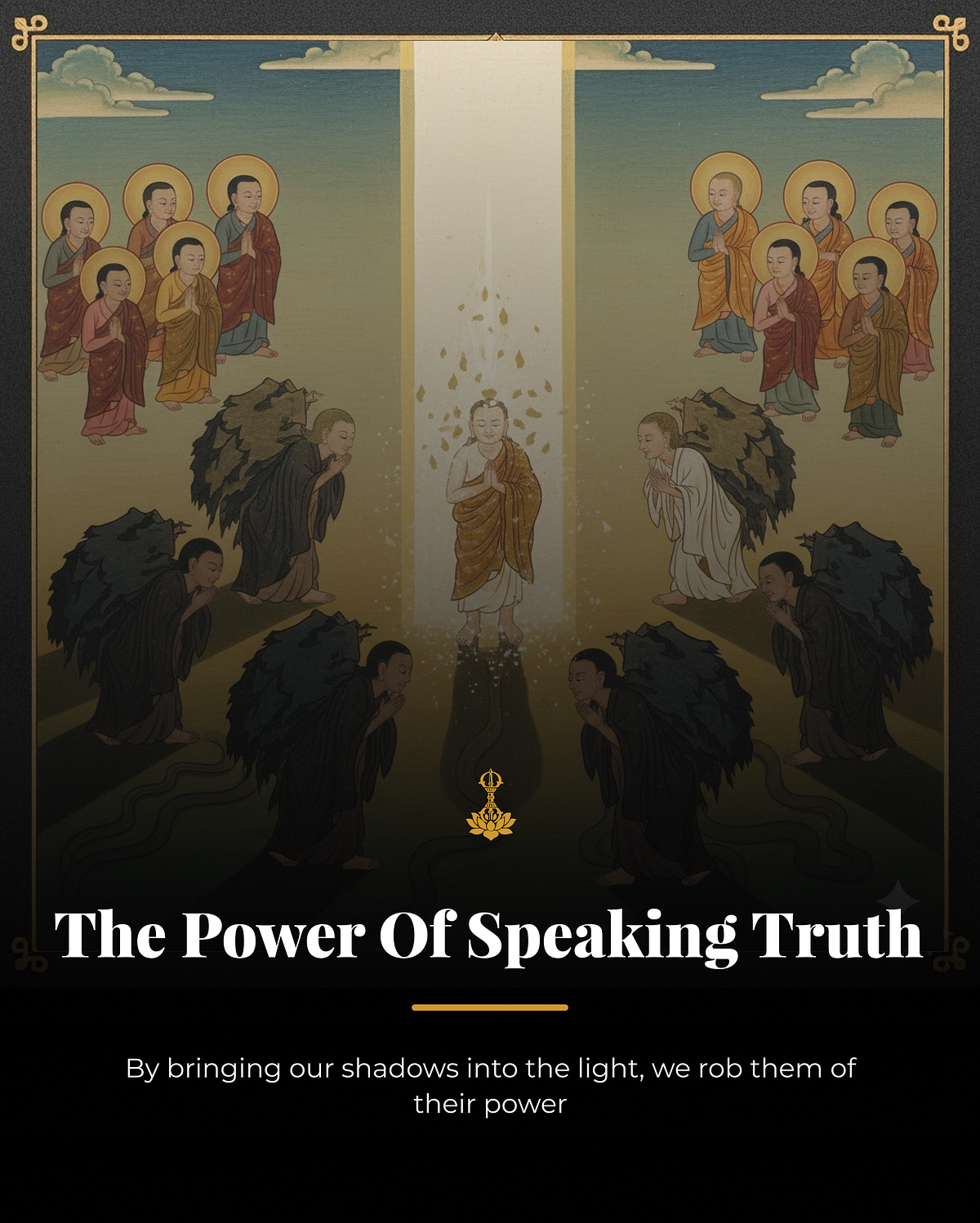
By bringing our shadows into the light, we rob them of their power. The guilt that would otherwise fester and grow in darkness loses its grip when exposed to the compassionate witness of our spiritual community. The practice recognizes a profound truth: we heal in relationship, not in isolation.
The Four Types of Transgressions
The monastic code divides infractions into categories based on severity, each with its own method of purification:
Defeats (Parajika): The most serious offenses that result in expulsion from monastic life. These include killing, stealing, sexual misconduct, and false claims of spiritual attainment. These cannot be purified through Sojong alone.
Formal Meetings (Sanghadisesa): Serious offenses requiring formal proceedings with the sangha. These might include causing schism in the community or groundless accusations against others.
Forfeitures (Naihsargika-payattika): Minor offenses often related to possessions, such as keeping prohibited items. These require confession and forfeiture of the item.
Simple Confessions (Payattika): The most common category, including things like eating after noon, lying, speaking harshly, or engaging in frivolous talk. These are purified through sincere confession during Sojong.
This graduated system recognizes that not all mistakes carry the same weight, but all deserve acknowledgment and attention.
Beyond Rules: The Heart of the Practice
If you’re not a monastic, you might be wondering: what does this have to do with me?
Everything.
While the specific vows recited during Sojong apply to monastics, the principle — regular ethical inventory and honest acknowledgment of our shortcomings — is universally applicable.
We all make commitments. To our partners, our children, our work, our values, ourselves. We all fall short. We speak harshly when we mean to be kind. We act from selfishness when we intend generosity. We harm when we hope to help.
What most of us lack is a framework for addressing these failures with dignity rather than denial or despair.
The Three Components of Purification
Sojong teaches that genuine purification requires three elements:
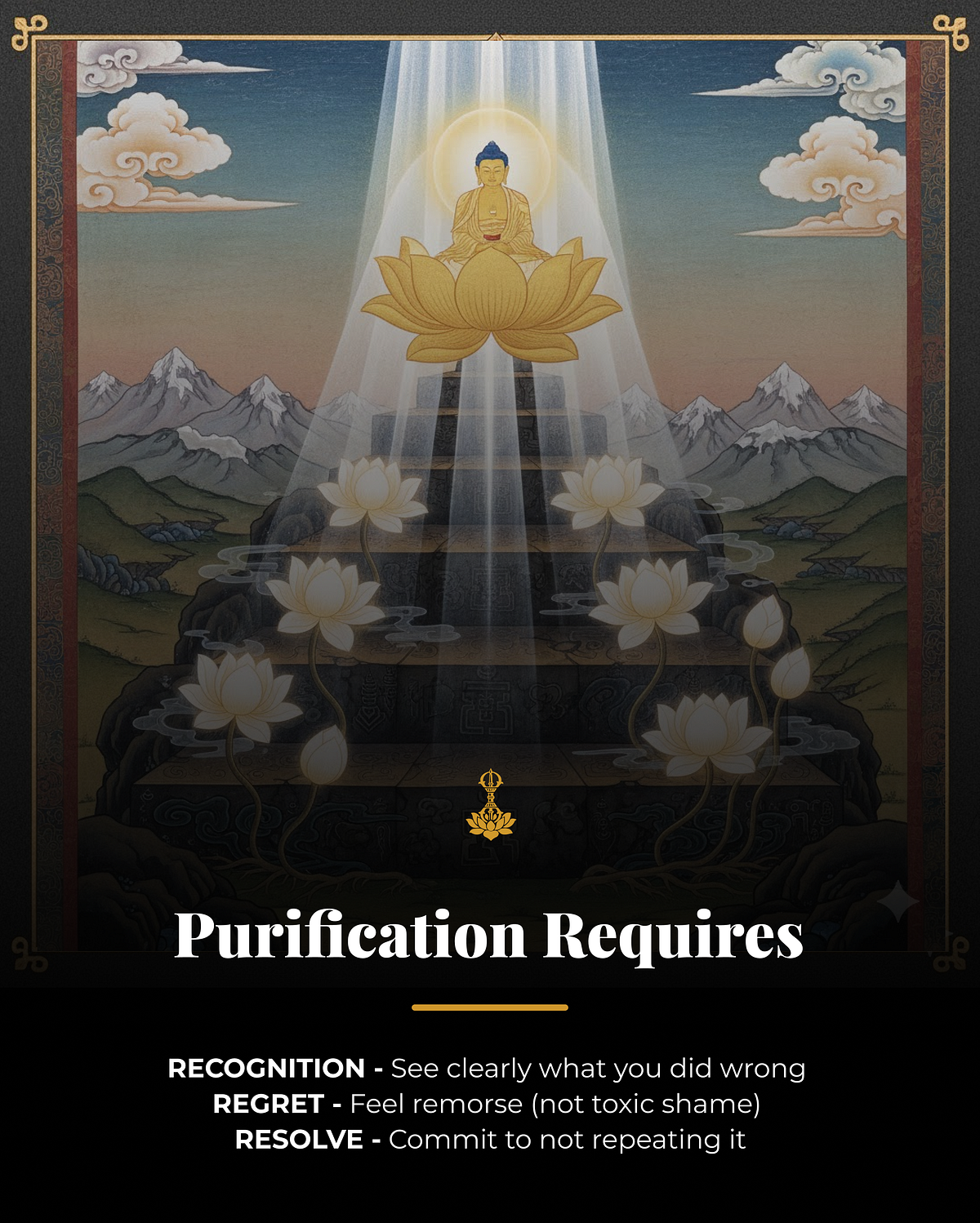
Recognition: First, you must clearly see what you’ve done wrong. Not in a vague, general way (“I’m a bad person”) but specifically (“I spoke angrily to my colleague yesterday”).
Regret: Next comes genuine remorse — not the toxic shame that says “I am bad,” but the healthy regret that says “I acted badly and I wish I hadn’t.” This distinction is crucial. Regret motivates change; shame paralyzes.
Resolve: Finally, you commit to not repeating the behavior. This isn’t a promise of perfection — you’re human, after all — but a sincere intention to do better.
These three steps transform confession from mere admission into actual transformation.
The Community as Mirror and Medicine
One of Sojong’s deepest insights is that we cannot see ourselves clearly alone. We need others to reflect back our blind spots, to hold us accountable, and to witness our recommitment.
During Sojong, when monastics confess, the response from the community isn’t judgment but acknowledgment. “I have heard your confession,” they say, creating a container of acceptance that makes honesty possible.
This is a community of medicine. Not the kind that tells you you’re fine when you’re not, but the kind that sees your struggles clearly and holds space for your growth anyway.
In monasteries, practitioners often speak of the relief that comes after Sojong — a lightness, as if they’ve put down a burden they didn’t realize they were carrying. That’s the gift of confession: it transforms the weight of secrecy into the spaciousness of acknowledgment.
Sojong for Modern Practitioners
You don’t need to be a monk or nun to benefit from the wisdom of Sojong. Many Buddhist centers now offer lay versions of these practices, adapted for people living in the world rather than in monasteries.
Lay practitioners might commit to observing the five basic precepts more carefully during Sojong days:
- Refraining from killing
- Refraining from stealing
- Refraining from sexual misconduct
- Refraining from false speech
- Refraining from intoxicants that cloud the mind
Some centers hold special one-day retreats on Sojong days where participants take additional temporary vows — perhaps eating only before noon, maintaining silence, or abstaining from entertainment — and then confess any violations before the day ends.
Even informally, you can adopt the spirit of Sojong. Set aside time twice a month to honestly review your actions. Ask yourself: Where have I fallen short of my own values? Where have I caused harm, even unintentionally? What do I need to acknowledge and release?
The Radical Act of Beginning Again
In our achievement-obsessed culture, we’re taught to hide our failures and project constant success. Social media amplifies this, showing us everyone’s highlight reel while we compare it to our behind-the-scenes struggles.
Sojong offers a different model entirely. It says: you will fail. That’s not a flaw in your character; it’s a feature of being human. The question isn’t whether you’ll stumble, but whether you’ll have the courage to acknowledge it and the wisdom to begin again.
This practice of regular renewal prevents two spiritual dangers:
Perfectionism: The exhausting belief that we must never make mistakes. This leads to brittleness, burnout, and a constant low-grade anxiety about being “found out.”
Nihilism: The defeated conviction that because we’ve failed, there’s no point in trying. This leads to giving up on growth entirely.
Sojong navigates between these extremes. It says: you made a mistake and you can do better. Both parts matter.
Creating Your Own Practice
If the philosophy of Sojong speaks to you, consider creating your own version:
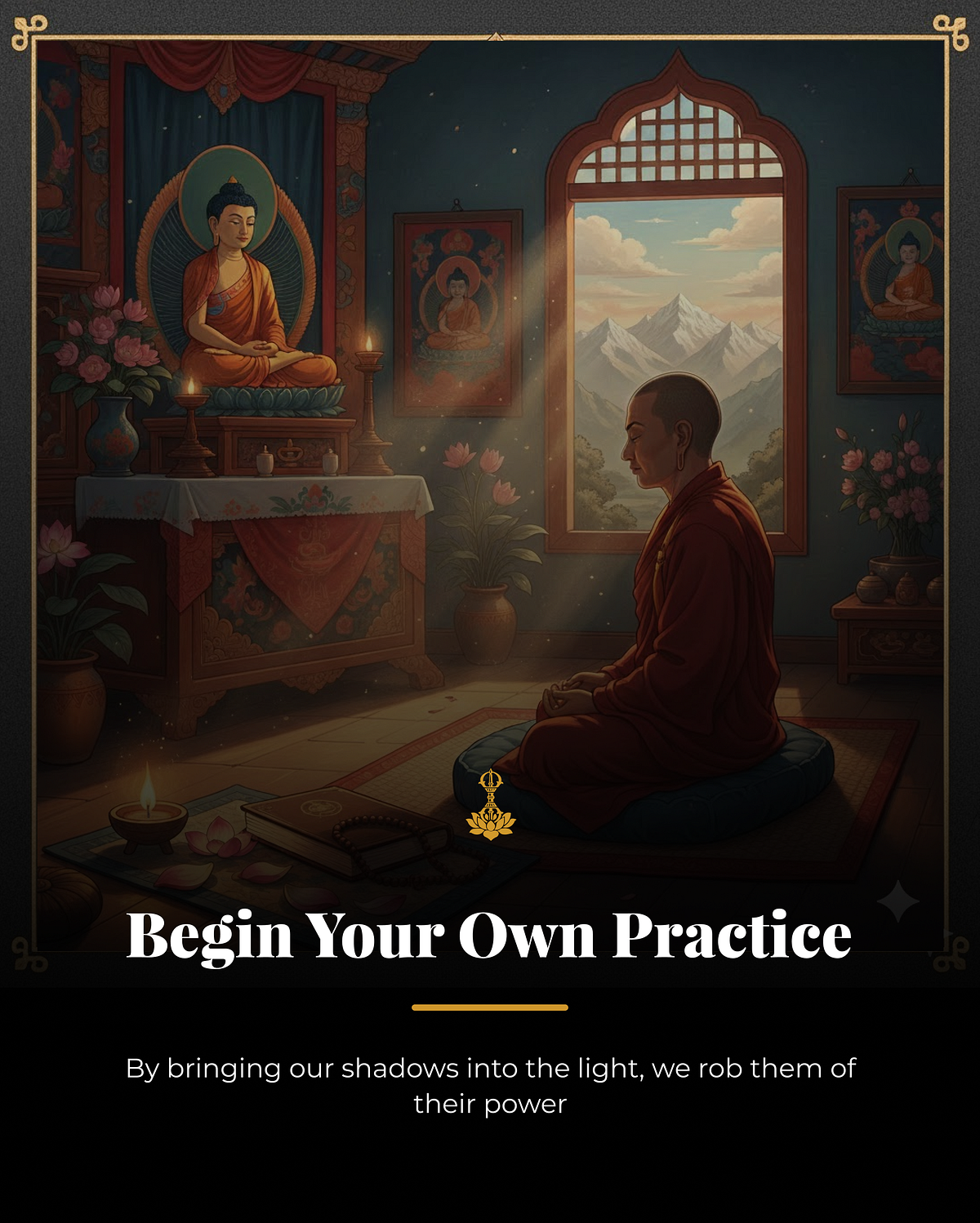
Choose Your Rhythm: Perhaps monthly instead of twice monthly, aligning with the full moon or the first of each month.
Clarify Your Commitments: What are the ethical principles you want to live by? Write them down. Be specific but realistic.
Create Accountability: Find a trusted friend, spiritual community, or therapist who can serve as your witness. Or keep a private journal if community confession feels too vulnerable right now.
Practice the Three Steps: Recognition, regret, resolve. Be honest about what happened, feel appropriate remorse, and recommit to your values.
End with Self-Compassion: After acknowledging your shortcomings, take a moment to appreciate your willingness to look honestly at yourself. That takes courage.
The Ongoing Journey
The beauty of Sojong is that it never ends. You don’t “graduate” from needing ethical renewal. Even the most advanced practitioners — even the Buddha himself during his lifetime — participated in these regular confessional practices.
This isn’t because the practice doesn’t work. It’s because life continues to present new challenges, and we continue to be imperfect humans navigating them. The practice works precisely because it acknowledges this reality rather than denying it.
At Vajraicon.com, we honor the full spectrum of Buddhist practice — from the devotional beauty of Guru Puja to the raw honesty of Sojong. We understand that authentic spirituality includes both the heights of realization and the humble work of acknowledging when we fall short.
The practices that have sustained Buddhism for 2,500 years aren’t the ones that promise instant enlightenment or require you to be perfect. They’re the ones that meet you exactly where you are, with all your flaws and failings, and offer you a path forward.
Sojong is one of those practices. It doesn’t ask you to be perfect. It asks you to be honest. And it promises that honesty, paired with sincere intention, is enough to begin again.
Every moment is an opportunity for renewal. Every confession is a declaration of hope. Every Sojong day is a reminder that your mistakes don’t define you — your willingness to acknowledge them and grow from them does.
The question isn’t whether you’re ready to be perfect. The question is: are you ready to be real?


