

For over two millennia, Buddhist statues have served as focal points for meditation, devotion, and spiritual contemplation. From the towering stone Buddhas of ancient Asia to the intricate bronze statues adorning modern meditation centers, these sacred representations are far more than mere decorative objects. The materials used in their creation carry profound spiritual significance, each offering unique qualities that enhance both the artistic expression and the devotional experience.
Whether you're a practitioner, collector, or simply curious about Buddhist art, understanding the materials and processes behind these statues reveals fascinating insights into how physical elements can embody spiritual truths.
Why Material Matters in Buddhist Statuary
Before exploring specific materials, it's essential to understand why the choice of medium is so significant in Buddhist art. Unlike Western religious art, which often prioritizes representational accuracy, Buddhist statuary emphasizes the relationship between material permanence and spiritual impermanence. The Buddha taught about the nature of reality, change, and the interdependence of all things—concepts often reflected in the very substance of his image.
Different materials offer varying degrees of durability, aesthetic qualities, and symbolic resonance. The selection of bronze over wood, or stone over cement, isn't merely practical—it's a statement about intention, context, and the statue's role in spiritual practice.
Bronze Buddhist Statues: The Gold Standard of Sacred Art
The Timeless Allure of Bronze
Bronze has been the premier material for Buddhist statuary for over 2,000 years, particularly across Tibet, Nepal, India, China, Japan, and Southeast Asia. When you encounter museum-quality Buddhist art, chances are you're looking at bronze. This copper-tin alloy has earned its prestigious position through an unmatched combination of durability, workability, and aesthetic beauty.
The Lost-Wax Casting Process
Creating a bronze Buddha is an intricate journey that can take weeks or even months. The traditional method, known as lost-wax casting (or cire perdue), is a testament to human ingenuity and devotion.
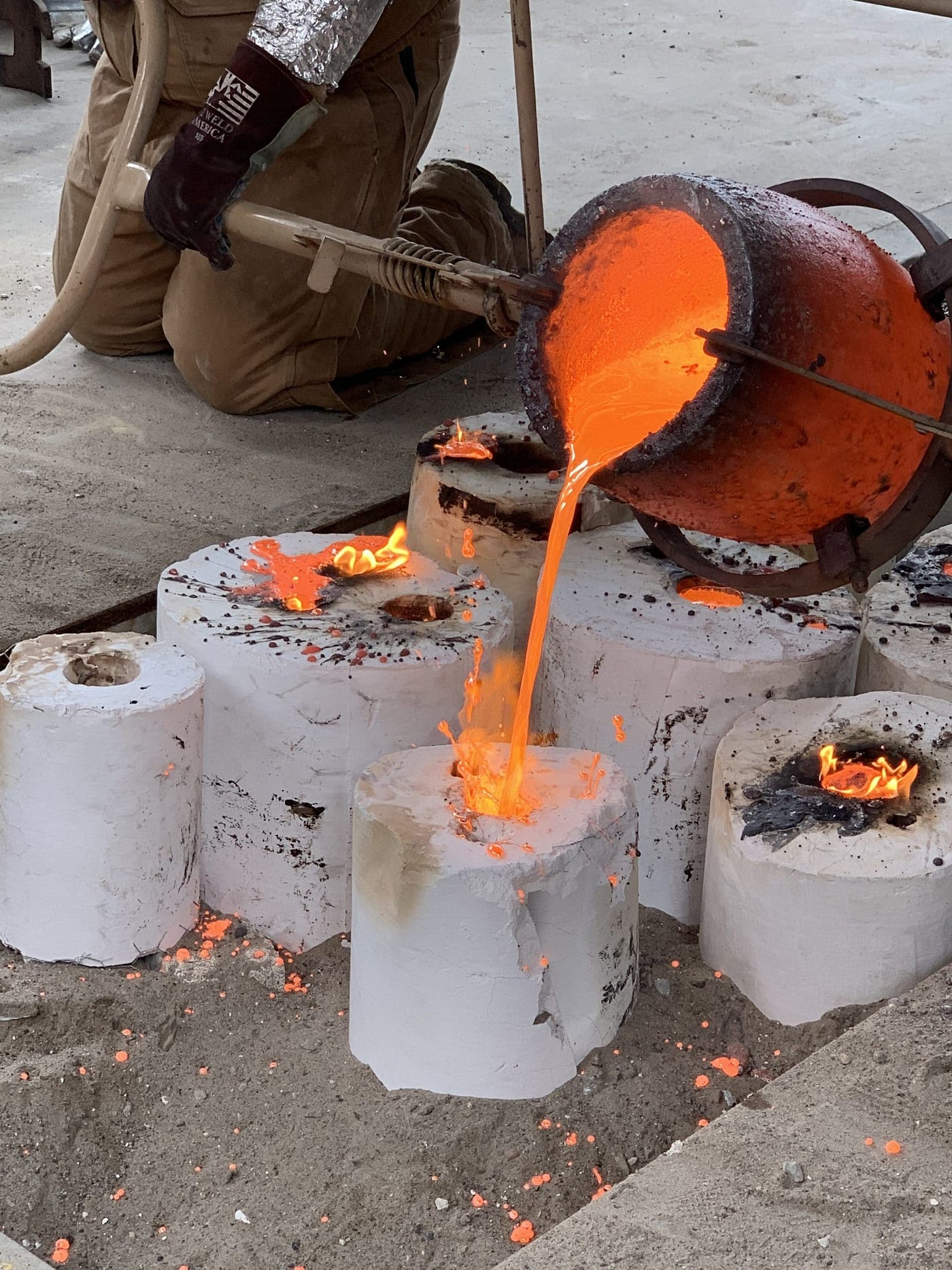
Photo by Ignite Studio at HEPL
The process begins with a sculptor creating a detailed wax model of the intended statue. This wax prototype captures every nuance—the serene expression, the precise mudras (hand gestures), the flowing robes. The wax model is then coated with multiple layers of clay and plaster, creating a sturdy mold. Once the mold hardens, it's heated, causing the wax to melt and drain away, leaving a perfect hollow cavity.
Molten bronze, heated to approximately 1,000 degrees Celsius, is poured into this cavity. After cooling and solidification, the outer mold is broken away, revealing the bronze statue within. What follows is extensive finishing work: filing away imperfections, polishing surfaces, and often applying gold gilding or colorful painted details.
Spiritual and Practical Significance
Bronze statues possess exceptional longevity, capable of surviving centuries with minimal deterioration. This durability makes them ideal for preserving sacred imagery across generations. The material's density allows for extraordinary detail—from the delicate curls of the Buddha's hair to the intricate patterns on ceremonial robes.
The warm, golden patina that bronze develops over time is particularly valued. This natural aging process, rather than diminishing the statue's beauty, is seen as enhancing its spiritual character. The patina becomes a visual record of devotion, each subtle shift in color representing years of prayers and offerings.
Bronze statues are especially prized in Tibetan Buddhism, where they often contain sacred relics, scrolls with mantras, or consecrated materials sealed within a cavity in the base. This practice, known as "filling," transforms the statue into a genuine sacred object rather than merely a representation.
Copper Buddhist Statues: Radiance and Purity
The Pure Metal Tradition
While bronze is technically a copper alloy, pure copper statues occupy their own special category in Buddhist art. Copper's distinctive reddish-gold color and superior malleability make it particularly favored in Nepalese and Tibetan artistic traditions.
Craftsmanship and Creation
Copper statues are typically created through repoussé and chasing techniques, where artisans hammer and shape copper sheets from both front and back to create three-dimensional forms. This method differs from bronze casting and allows for incredibly thin, lightweight statues with remarkable detail.
The process requires extraordinary skill. Artisans work the copper while it's in an annealed (softened) state, repeatedly heating and hammering the metal. For larger statues, multiple copper sheets are joined together using traditional riveting or welding techniques. The surface is then meticulously refined through chasing—using specialized tools to add fine details, textures, and patterns.
Why Copper Matters
Copper's natural antimicrobial properties have made it symbolically associated with purity and healing in many Buddhist cultures. The metal's warm, living glow is said to emanate compassion and warmth, qualities central to Buddhist practice.
Copper statues are often gilded with gold, creating the iconic golden Buddhas seen in temples throughout Asia. The gold leaf adheres beautifully to copper's surface, and the combination of the two noble metals is considered especially auspicious. The contrast between the reddish copper base and brilliant gold overlay creates depth and luminosity that seems almost supernatural in candlelit temple settings.
In Tibetan traditions, copper is sometimes combined with other metals in specific proportions to create sacred alloys believed to have spiritual properties. These formulas, passed down through generations of artisan families, remain closely guarded secrets.
Stone Buddhist Statues: Eternal Presence
Mountains into Buddhas
Stone carving represents one of humanity's oldest artistic traditions, and some of the world's most awe-inspiring Buddhist statues are carved from solid rock. From the colossal Buddhas of Bamiyan (tragically destroyed) to the serene stone carvings of Angkor Wat, stone statuary creates an impression of timeless permanence.
Photo by Hat Trick on Unsplash
Materials and Methods
Buddhist stone statues utilize various types of rock, each with distinct characteristics:
Granite offers supreme durability and resistance to weathering, making it ideal for outdoor statuary. Its hardness presents significant challenges to carvers but ensures the finished work can endure for millennia.
Sandstone is softer and more workable, allowing for greater detail and smoother finishes. Ancient Indian Buddhist sculptures frequently employed red or buff sandstone, which could be carved with relative ease while still maintaining structural integrity.
Marble provides a luminous white or veined appearance prized for indoor statuary. Its fine grain allows for exceptional detail, and its subtle translucency gives statues an ethereal quality.
Jade and other semi-precious stones are used for smaller statues, particularly in Chinese Buddhist traditions. These materials carry additional symbolic meanings related to purity, immortality, and spiritual power.
The Carving Process
Creating a stone Buddha is an act of revelation rather than construction. Sculptors traditionally believe they're releasing the image already present within the stone, removing everything that isn't Buddha.
The process begins with selecting an appropriate stone block, considering grain, color, and structural soundness. Preliminary shapes are blocked out using heavy chisels and hammers. As the form emerges, artisans switch to progressively finer tools, adding detail layer by layer. The final stages involve extensive polishing using abrasive stones and sand to achieve the desired surface finish.
Traditional carvers work without detailed plans, relying instead on internalized proportional systems passed down through generations. This intuitive approach requires years of training and deep familiarity with Buddhist iconography.
Spiritual Dimensions
Stone's permanence makes it the material of choice for monumental outdoor Buddhas intended to endure for ages. These statues often mark sacred sites or commemorate significant events. The effort required to carve stone—the physical labor, patience, and skill—is itself viewed as a devotional act.
Stone Buddhas convey solidity and groundedness, qualities that support meditation practice. Their weight and immobility reflect the unshakeable nature of enlightened wisdom. Many practitioners report feeling a special presence around ancient stone statues, as if the material itself has absorbed and retained spiritual energy over centuries.
Cement Buddhist Statues: Modern Accessibility
The Contemporary Material
Cement (or concrete) Buddhist statues represent a modern development in sacred art. While purists may question their authenticity, cement statues have democratized access to Buddhist imagery, making it possible for temples, meditation centers, and individuals to acquire large, durable statues at reasonable costs.
Production Process
Cement statues are created using mold-casting techniques. Artisans create a master sculpture, typically in clay or plaster, which serves as the basis for a mold. This mold—often made from fiberglass, rubber, or silicone—can be used repeatedly to produce multiple copies.
The cement mixture, combined with aggregates and reinforcing materials like steel rebar or fiberglass mesh, is poured or packed into the mold. For larger statues, the cement may be applied in layers to ensure even distribution and proper curing. After the cement sets and cures (a process taking several days to weeks), the mold is removed, revealing the statue.
Finishing work includes filling imperfections, smoothing surfaces, and applying protective sealants. Many cement statues are painted with weather-resistant coatings or covered with gold-colored finishes to enhance their appearance.
Advantages and Considerations
Cement's primary advantage is cost-effectiveness. Large outdoor statues that would be prohibitively expensive in bronze or stone become achievable in cement. The material is also versatile—it can be molded into any size or form, allowing for ambitious sculptural projects.
However, cement lacks the craftsmanship prestige of traditional materials. Each cement statue from a mold is essentially identical to countless others, lacking the uniqueness of hand-carved or individually cast pieces. The material is also porous and susceptible to weathering, requiring ongoing maintenance to prevent cracking, staining, or deterioration.
Despite these limitations, cement has enabled the construction of impressive, large-scale Buddha statues around the world, including several of the tallest Buddha statues in existence. For communities with limited resources but deep devotion, cement provides a practical path to creating sacred spaces.
Finding Sacred Meaning
In Buddhist philosophy, attachment to material perfection can itself become an obstacle to spiritual development. A cement Buddha consecrated with sincere intention and used for genuine practice can be as spiritually significant as a priceless antique bronze. The material serves the practice; the practice doesn't serve the material.
Wood: The Organic Medium (Honorable Mention)
While not always categorized with stone and metal, wooden Buddhist statues deserve recognition as a major tradition, particularly in Southeast Asia, Japan, and China. Wood offers warmth and organic beauty that metal and stone cannot match.
Woods like sandalwood, teak, and camphor are traditionally preferred for their durability, pleasant aromas, and spiritual associations. The carving process resembles stone carving but allows for greater delicacy and undercut details. Wooden statues are often lacquered, gilded, or painted, creating spectacular multi-layered finishes.
Wood's primary vulnerability is its organic nature—it's susceptible to insects, rot, and fire. This impermanence has profound symbolic resonance with Buddhist teachings about the transitory nature of all phenomena. A wooden statue's eventual decay serves as a contemplative reminder of impermanence itself.
Choosing the Right Material: Context and Purpose
Understanding these materials helps in appreciating Buddhist art, but it also has practical applications for practitioners, collectors, and temple planners.
For meditation spaces, bronze and copper statues offer durability and traditional authenticity. Their weight provides stability, and their surfaces develop meaningful patinas over time.
For outdoor installations, stone or high-quality cement is a practical choice. Stone offers unmatched permanence for locations where budget permits, while cement provides size and durability for larger projects.
For personal practice, any material can be appropriate. What matters most is the statue's proportion, artistic quality, and your personal connection to it. A well-crafted cement Buddha can support practice more effectively than a poorly made bronze piece.
For collectors and museums, bronze and stone statues from recognized artistic traditions hold historical, cultural, and monetary value. Provenance, age, and craftsmanship become primary considerations.
The Consecration Factor
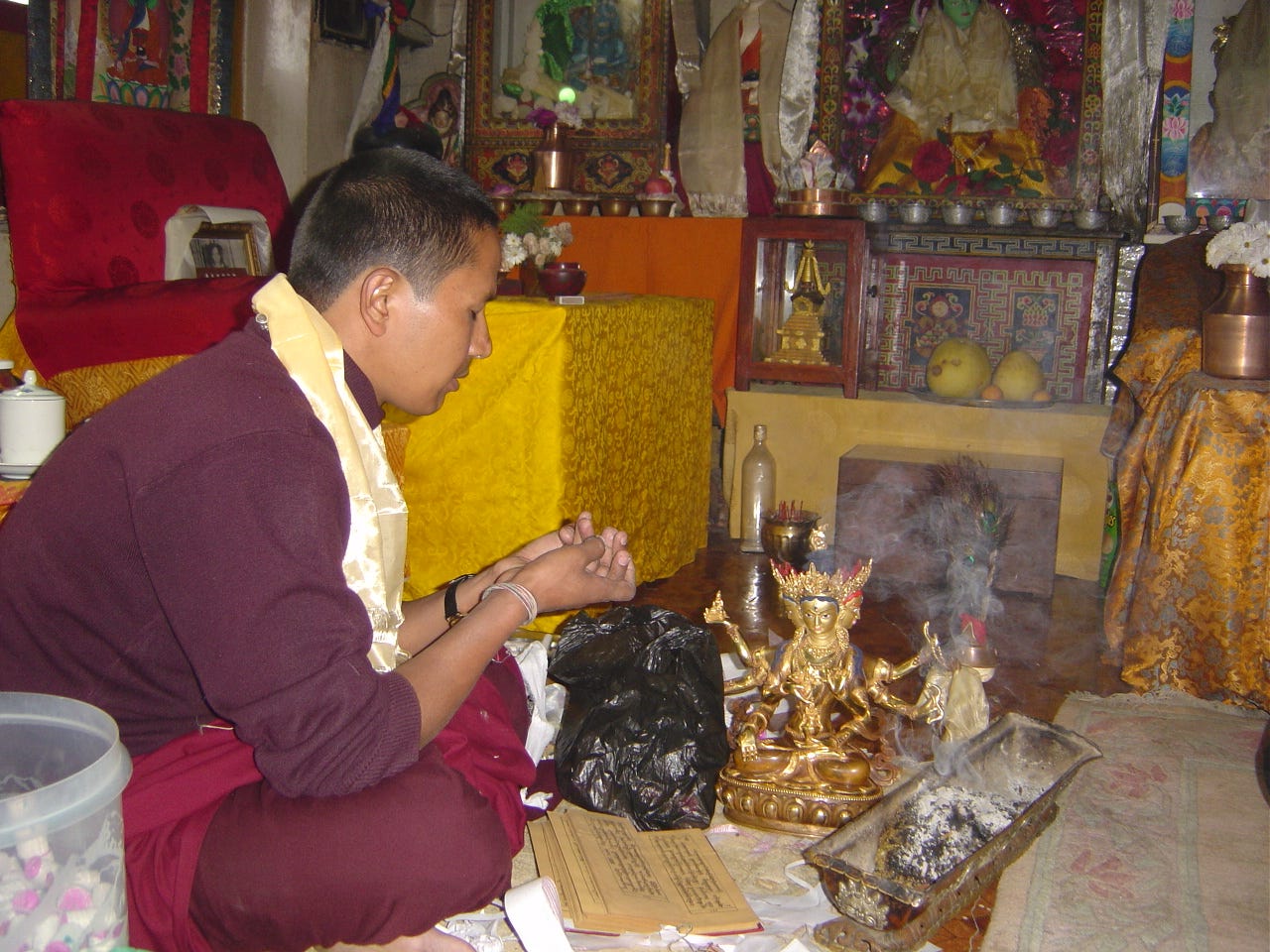
Photo by Online Market for Nepalese Hand made crafts
Regardless of material, a Buddhist statue's spiritual significance is ultimately determined by consecration—the ritual process that transforms an artistic object into a sacred one. This ceremony, conducted by qualified monastics, involves prayers, mantras, and often the placement of sacred materials within the statue.
Through consecration, the material becomes a vessel for spiritual presence. The physical elements—whether bronze, copper, stone, or cement—serve as a foundation for something beyond the merely physical. This understanding helps contextualize material discussions: the substance matters, but ultimately serves a purpose beyond itself.
Preserving Sacred Art
Each material requires specific care:
Bronze and copper benefit from gentle cleaning with soft cloths and protection from harsh chemicals. The natural patina should be preserved rather than polished away.
Stone statues need protection from freeze-thaw cycles in cold climates and occasional gentle cleaning. Sealants can help protect porous stones.
Cement requires the most maintenance, including regular sealing, crack repair, and protection from moisture infiltration.
Regardless of material, Buddhist statues should be treated with respect, kept clean, and placed in locations where they won't be damaged or treated disrespectfully.
Conclusion: Material as Metaphor
The diverse materials used in Buddhist statuary reflect Buddhism's remarkable adaptability across cultures and eras. From ancient bronze casting techniques to modern cement molding, each material and method represents a different answer to the same question: How do we give physical form to enlightened wisdom?
Bronze endures, carrying traditions across centuries. Copper radiates warmth and purity. Stone grounds us in permanence and presence. Cement makes the sacred accessible. Each material contributes unique qualities to the rich tapestry of Buddhist artistic expression.
Perhaps most importantly, understanding these materials deepens our appreciation for the human dimension of Buddhist practice. Behind every statue—regardless of material—lie countless hours of skilled labor, artistic vision, and devotional intention. The artisan's hands that shape metal, carve stone, or cast cement are themselves engaged in a form of practice, creating objects that will support others on their spiritual journeys.
In the end, the Buddha's teachings remind us that no material object, however beautifully crafted, is the ultimate refuge. Yet these statues serve a profound purpose: they inspire, focus, and uplift. They connect us to centuries of tradition while supporting present-moment practice. They transform spaces into sanctuaries and remind us of our own potential for awakening.
Whether you find yourself before an ancient bronze Buddha in a Tibetan monastery, a weathered stone carving in a jungle temple, or a simple cement statue in a neighborhood meditation center, remember that the material serves the moment. And in that moment of genuine connection, all materials become equally sacred.


